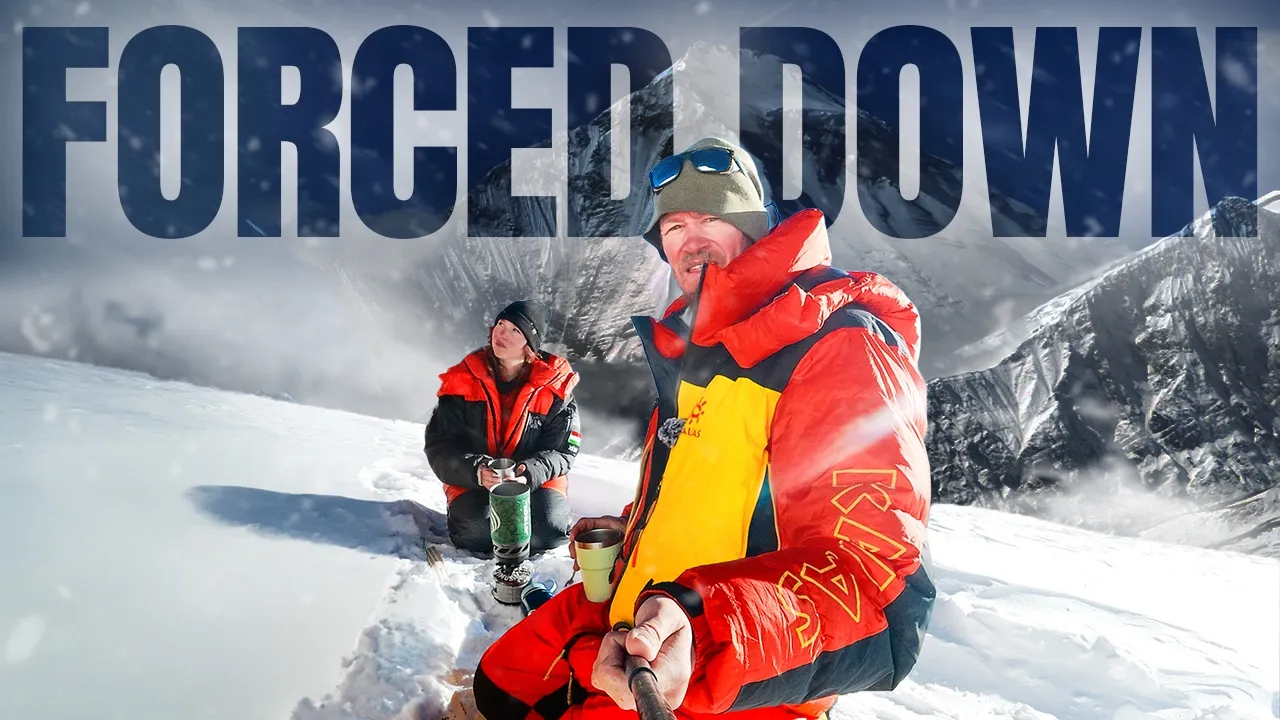

EXPEDITION OVERVIEW
STATUS
ATTEMPTED
EXPEDITION YEAR
2026
SUPPLEMENTAL OXYGEN
NO O2
THE STORY
Dhaulagiri 2026 — Another Attempt, Another Disappointment
In September 2026, I returned to Dhaulagiri for my second attempt at reaching its 8,167-meter summit.
After an unsuccessful expedition in October 2025, I was determined to return better prepared and finally complete one of the remaining mountains in my 14 Peaks project.
Unfortunately, Dhaulagiri had other plans.
Shortly after arriving at Base Camp, a massive storm brought more than two meters of snow to the mountain, burying fixed ropes, triggering frequent avalanches and forcing climbing teams to retreat.
While most climbers left Base Camp to wait for conditions to improve, Xenia and I decided to remain, preserving our acclimatization and hoping the mountain would eventually settle.
After weeks of waiting, we finally resumed climbing.
We established our camps, climbed above 7,000 meters and reached approximately 7,050 meters at lower Camp 3, where we deposited equipment in preparation for a summit attempt.
With a promising weather window approaching, we were preparing for our final push when the SST/14 Peaks rope-fixing operation was discontinued.
Without a completed fixed route, our planned summit attempt could not continue. Shortly afterwards, 8K Expeditions officially cancelled the expedition.
Despite the disappointment, we returned safely to Kathmandu.
This was my second unsuccessful attempt at Dhaulagiri, but I'm not finished with this mountain.
I'm hoping to return in spring 2027 for a third attempt, although plans are not yet confirmed.
THE STORY BEGINS — 2025
To understand why Dhaulagiri means so much to me, we need to go back to my first attempt in 2025.
UNFINISHED BUSINESS
Dhaulagiri wasn’t originally part of some carefully planned sequence.
After summiting Manaslu in September 2025, I wanted to keep climbing. Dhaulagiri was the next 8,000-meter mountain available, so I joined the 8K Expeditions team with Ashok Lama and headed west.
At that point I had one 8,000-meter summit behind me.
Dhaulagiri was going to be number two.
We flew from Kathmandu directly to Base Camp on September 30 and arrived beneath one of the biggest mountains in the Himalayas.
But almost immediately, the weather began to change.
And it didn’t stop.

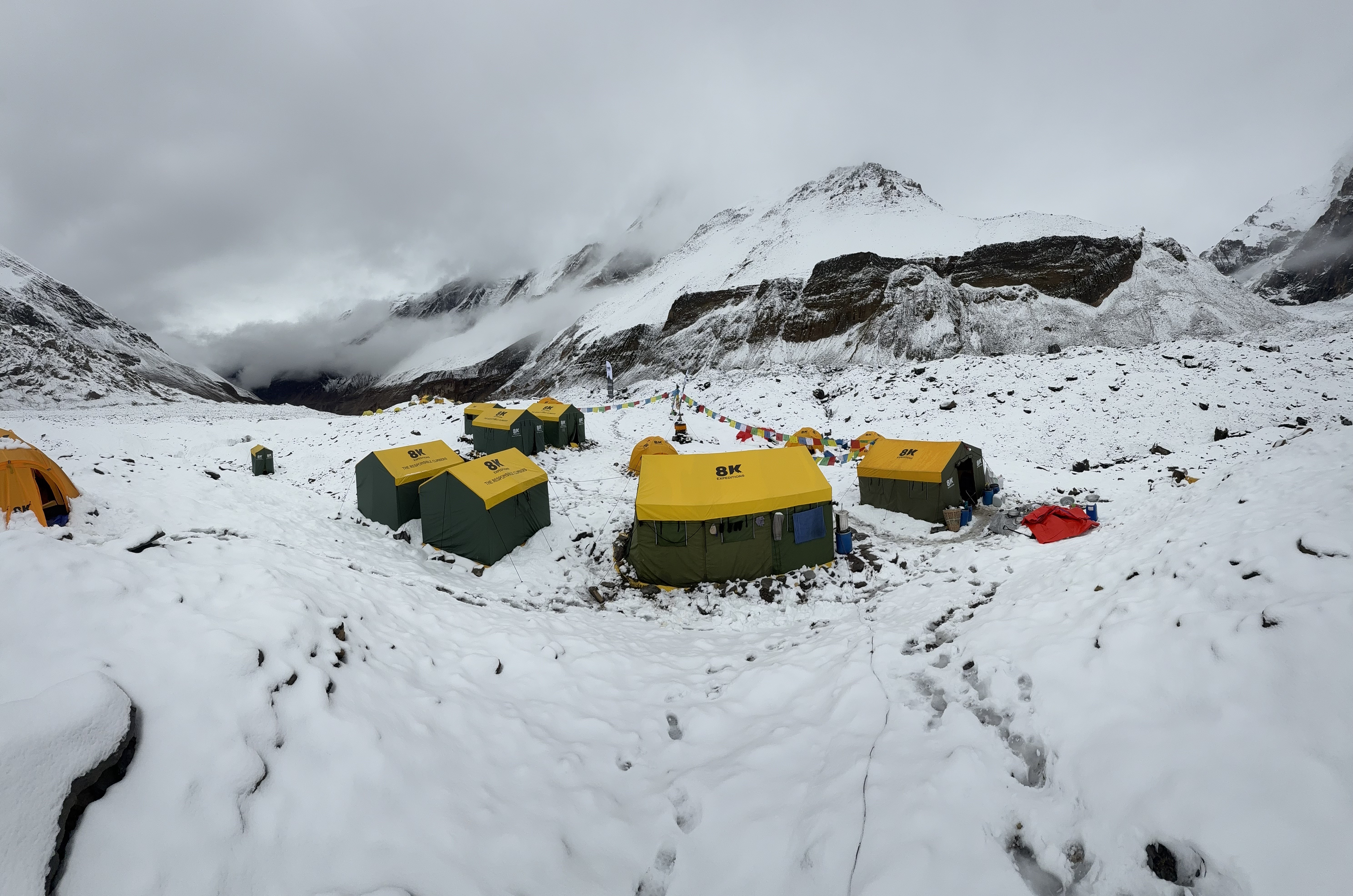

TOO MUCH SNOW
For around ten days, Dhaulagiri disappeared into bad weather.
It snowed relentlessly.
By the time we finally had an opportunity to move higher, more than a meter and a half of snow had fallen on parts of the mountain.
The existing route had effectively disappeared.
Fixed lines were buried. Camps were buried. And instead of following an established route, we were breaking trail through deep snow.
We pushed higher anyway.
By then I was climbing in my Millet 8,000-meter boots with Petzl Sarken crampons, carrying my Hyperlite Halaka 55 and using my Blue Ice harness with a Petzl ascender on the fixed lines. My Petzl Sum’Tec was the axe I carried as we broke trail through the deep snow.
But the mountain was becoming increasingly unstable.


THE MOUNTAIN SAID NO
We eventually reached around 6,800 meters near Camp 2.
Above us was the route toward Camp 3.
Then an avalanche came through.
It destroyed the route and fixed lines between Camps 2 and 3 and effectively ended the expedition.
Thankfully, nobody was injured.
There was nothing heroic about the decision that followed.
The mountain wasn’t safe.
We turned around.
My first attempt on Dhaulagiri was over before I’d really had the opportunity to climb it.
A LESSON I HAD TO LEARN TWICE
Dhaulagiri taught me something important.
On these mountains, being strong isn't enough.
You have to arrive ready.
When the mountain gives you a weather window, you need to be acclimatized, prepared and capable of moving immediately.
If you're not, that opportunity may never come again.
It was a lesson I thought I'd learned.
Then, on Khan Tengri in 2026, I made almost exactly the same mistake.
We arrived too late, missed the best weather window and spent the rest of the expedition chasing forecasts that never quite materialized.
Two different mountains.
The same lesson.
Don't wait for the mountain to fit your schedule.
Be ready when it opens.
RETURNING IN 2026
One year later, I’m going back.
After climbing Annapurna, Makalu, Everest and Lhotse in the spring, Dhaulagiri was still unfinished business.
But I’m not returning simply to repeat the expedition.
This time the objective is very different.
I want to climb Dhaulagiri without supplemental oxygen.
At 8,167 meters, that puts me into territory I’ve never experienced before.
My highest point without oxygen is somewhere around 7,800 meters.
Everything above that will be new.
A DIFFERENT STYLE
This expedition will also be more independent than my previous 8,000-meter climbs.
Xenia and I will share one Sherpa primarily for safety, communication and decision support rather than climbing with individual personal guides.
We’ll carry our own equipment.
We’ll establish our camps during rotations, cook for ourselves and take turns with the work on the mountain.
Where possible, we’ll also help with fixing ropes and establishing the route.
We will have three bottles of oxygen positioned high on the mountain, two for our Sherpa and one emergency bottle shared between Xenia and me.
The objective is simple:
If I stand on the summit, I want to get there without using it.
INTO THE UNKNOWN
‘ve climbed five 8,000-metre mountains.
But this feels different.
Supplemental oxygen changes the way your body performs at extreme altitude, and I’ve never been above roughly 7,800 metres without it.
I don’t know exactly how my body will respond beyond that point.
That’s part of why I’m doing this.
The long-term objective isn’t simply to collect fourteen summits.
I want to become a better high-altitude climber.
Learning how I perform without oxygen, how I move, recover, make decisions and manage risk, is part of that progression.
Dhaulagiri is the next step.
THE NEXT STEP
Right now, we're in Kathmandu making the final preparations.
Gear is being checked.
Permits are being finalized.
And this time, instead of flying directly into Base Camp, we're going in on foot with the 8K team.
Soon we'll leave Kathmandu and begin the journey back toward Dhaulagiri.
One year later.
Same mountain.
Different approach.
This time, we mean business.
EXPEDITION UPDATES
FROM THE MOUNTAIN
Dhaulagiri Base Camp
Dhaulagiri 2026 Expedition Cancelled
After weeks of uncertainty, our 2026 Dhaulagiri expedition has officially come to an end.
Following the decision by Seven Summit Treks (SST) and 14 Peaks to discontinue rope fixing higher on the mountain, 8K Expeditions confirmed that our expedition would not continue.
With no completed route to the summit and no coordinated plan to resume fixing ropes, our hopes of making another attempt this season were over.
Xenia and I have now left Dhaulagiri Base Camp and returned safely to Kathmandu.
It's an incredibly disappointing outcome.
This was my second attempt at Dhaulagiri, following an unsuccessful expedition in October 2025, when heavy snowfall and avalanche conditions also prevented us from reaching the summit.
This year, we endured more than two meters of snowfall at Base Camp, watched avalanches sweep down the mountain for days, waited for climbing teams to return and eventually made our way back above 7,000 meters.
We reached approximately 7,050 meters at lower Camp 3, where we deposited equipment in preparation for our summit attempt.
After weeks of waiting and uncertainty, everything finally appeared to be coming together. We had a promising weather window, our acclimatization was progressing, and we were preparing to make our final push towards Dhaulagiri's 8,167-meter summit.
Unfortunately, the decision to discontinue rope fixing brought those plans to an abrupt end.
What makes this particularly frustrating is that we weren't turned around by exhaustion, illness or a lack of determination. We were ready to continue climbing, but the expedition infrastructure we had been relying upon was no longer available.
Despite the disappointment, I'm grateful that Xenia and I returned safely.
High-altitude mountaineering requires patience, adaptability and the willingness to accept that not every expedition ends on a summit.
But that doesn't make this one any easier to accept.
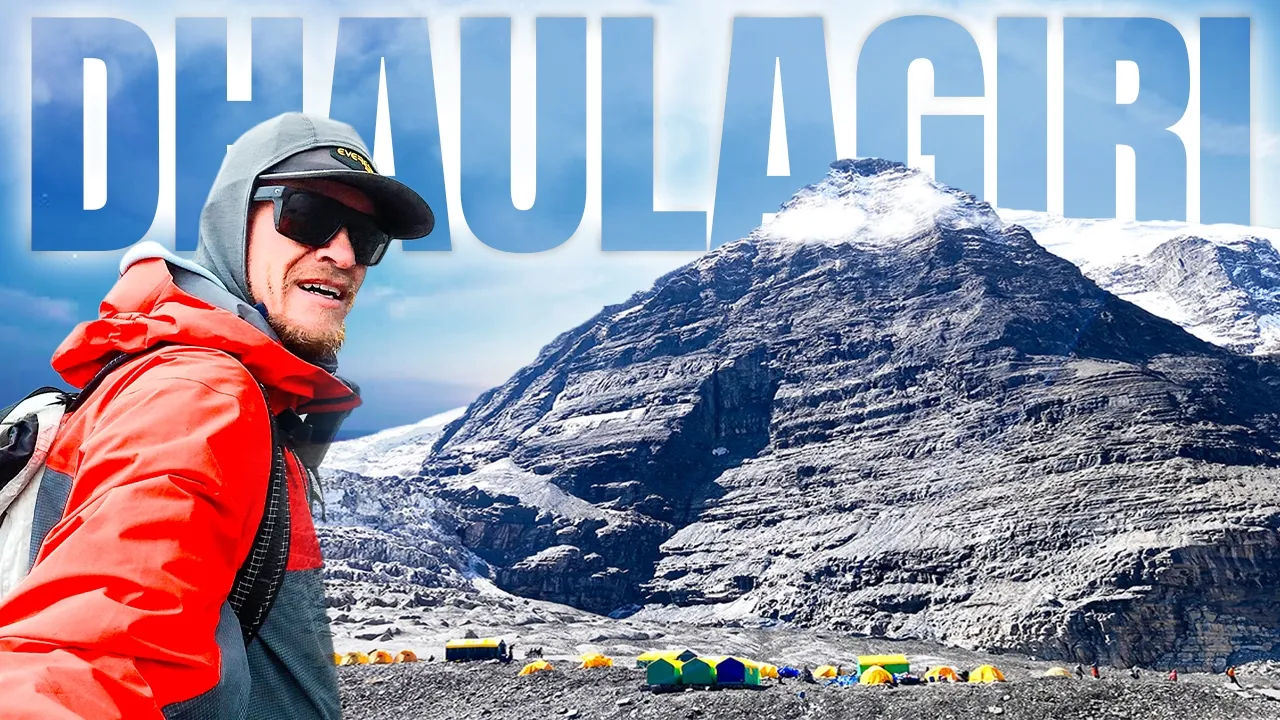
Dhaulagiri — What Really Happened?
After returning to Base Camp, I hosted a livestream to explain what happened during our final summit push, the decision to stop fixing ropes and why our expedition ultimately came to an end.
In the livestream, I share my firsthand experience, discuss the challenges we faced and answer questions about the situation on Dhaulagiri.
Watch the full livestream below.
Unfinished Business — Spring 2027?
Dhaulagiri remains unfinished business.
After two unsuccessful attempts, I'm more determined than ever to stand on its 8,167-meter summit.
I'm hoping to return in spring 2027 for a third attempt, although nothing has been confirmed yet.
For now, it's time to regroup, review what happened and start preparing for the next adventure.
Thank you to everyone who followed along, supported us and shared the journey.
Dhaulagiri, I'll be back.
— Paul, Outdoor Pirate 🏔️🏴☠️

Dhaulagiri Base Camp
Summit Push Abandoned — Back to Base Camp
Unfortunately, this isn't the update I was hoping to write.
We're safely back at Dhaulagiri Base Camp after an incredibly disappointing end to our summit push.
We woke at Camp 2 to the news that Seven Summit Treks (SST), who had been responsible for the rope-fixing operation higher on Dhaulagiri, had decided not to continue and were descending towards Base Camp.
Without the remaining route being fixed, our planned summit attempt could no longer proceed.
Although Dhaulagiri isn't considered among the most technically difficult 8,000-meter mountains by its normal route, climbing it independently without fixed ropes requires additional technical equipment and a different approach.
This expedition had been organized around established high-altitude fixed lines.
Xenia and I therefore weren't carrying the additional ice axes, ropes and full climbing rack that would have been necessary for us to consider continuing independently.
Had we known the rope-fixing operation might be abandoned, we could have prepared differently and potentially explored an independent attempt.
At approximately 11:00 AM, we began descending from Camp 2.
Conditions were beautiful, with clear skies and very little wind.
We reached Base Camp around 3:30–4:00 PM.
What makes the situation particularly frustrating is that the weather window for the planned summit attempt looked extremely promising.
After enduring more than two meters of snowfall, weeks waiting at Base Camp, frequent avalanches, buried ropes and the effort required to re-establish the route, we had finally made it back above 7,000 meters.
Now, despite the favorable weather, our summit push has ended.
For the moment, the expedition hasn't officially been cancelled.
We're back at Base Camp, regrouping and trying to understand whether another attempt might still be possible.
We don't know how, when or who would be involved in making that happen.
For now, all we can do is wait for further information.


Camp 3 Dhaulagiri
Above 7,000 Meters — Climbing Towards Camp 3
Today was one of the hardest days of the expedition so far.
We woke around 6:00 AM to beautiful blue skies and quickly began preparing for our climb towards Camp 3.
By approximately 9:00 AM, we were leaving Camp 2 at around 6,235 meters.
I could see clouds beginning to rise from the valley below, so I decided to climb in my full summit suit.
That turned out to be a good decision.
By 9:30–10:00 AM, the clouds had rolled in, visibility deteriorated and the temperature dropped.
Fortunately, I was already fully zipped into my summit suit and staying warm.
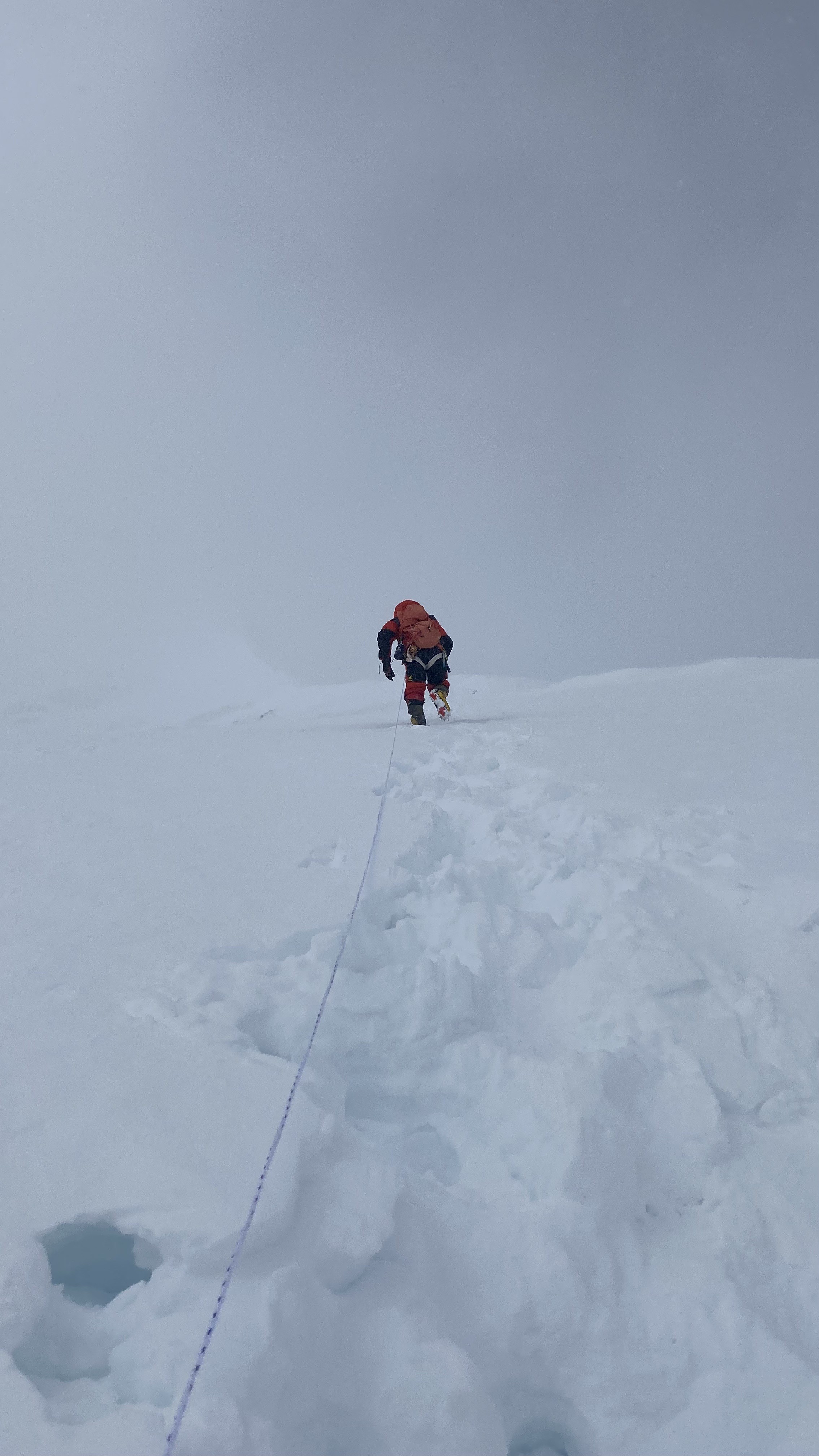
Above approximately 6,800 meters, the climbing became increasingly difficult.
Every step required concentration and effort. Progress slowed considerably as we continued higher into the thinner air.
Eventually, we reached approximately 7,050 meters at lower Camp 3.
From Camp 2, that's around 815 meters of net elevation gain, although my Garmin Fenix recorded approximately 1,035 meters of total ascent along the undulating route.
A substantial effort at this altitude.
We deposited tents and oxygen cylinders for climbers planning to use supplemental oxygen before turning around and beginning the descent.
Back at Camp 2, Xenia was waiting with hot tea and noodles.
After such a demanding day, it was exactly what I needed.
Another successful climb-high, sleep-low day, and hopefully valuable acclimatization before our summit attempt.
Tomorrow is planned as a rest day, followed by a return to Camp 3 on October 11.
If conditions allow, we're still hoping to summit Dhaulagiri early on October 12.
For now, we're making progress.

Camp 2 Dhaulagiri
Fresh Snow Forces a Rest Day at Camp 2
Dhaulagiri has reminded us once again that plans can change overnight.
We woke this morning to approximately 30–40 centimeters of fresh snow around Camp 2.
Our original intention was to continue climbing towards Camp 3, but with overcast skies, strong winds and deep snow, we decided to remain at camp.
Instead, we've spent the day resting, hydrating, eating and recovering inside the tent.
Around 2:00 PM, several other climbers arrived at Camp 2, including one carrying a Starlink Mini.
Having an internet connection at this altitude is an unexpected luxury. Normally, I send short expedition updates through my Garmin inReach for Shaun, my editor, to publish. Today, I've actually been able to connect directly and respond to messages from the mountain.
As evening approaches, we're preparing for another cold night.
Our revised plan is to climb towards Camp 3 tomorrow, deposit equipment at approximately 7,200 meters and descend back to Camp 2 to sleep.
If everything goes well, we'll continue preparing for a summit attempt, hopefully departing Camp 3 on the night of October 11 and reaching Dhaulagiri's 8,167-meter summit early on October 12.
Of course, that's the current plan.
I think we're up to Plan C, D or E by now!
Everything depends on the weather, snow conditions and how the mountain responds over the coming days.


Camp 2 Dhaulagiri
Climbing to Camp 2 — The Cold Returns
Yesterday we left Camp 1 at approximately 10:00 AM, aiming to reach Camp 2 at around 6,300 meters.
Compared with the previous day's climb, the route wasn't particularly difficult, but our heavy packs made progress slow.
We eventually reached Camp 2 at approximately 2:00 PM, just as the sun began disappearing behind Dhaulagiri.
Once again, the temperature dropped almost immediately.
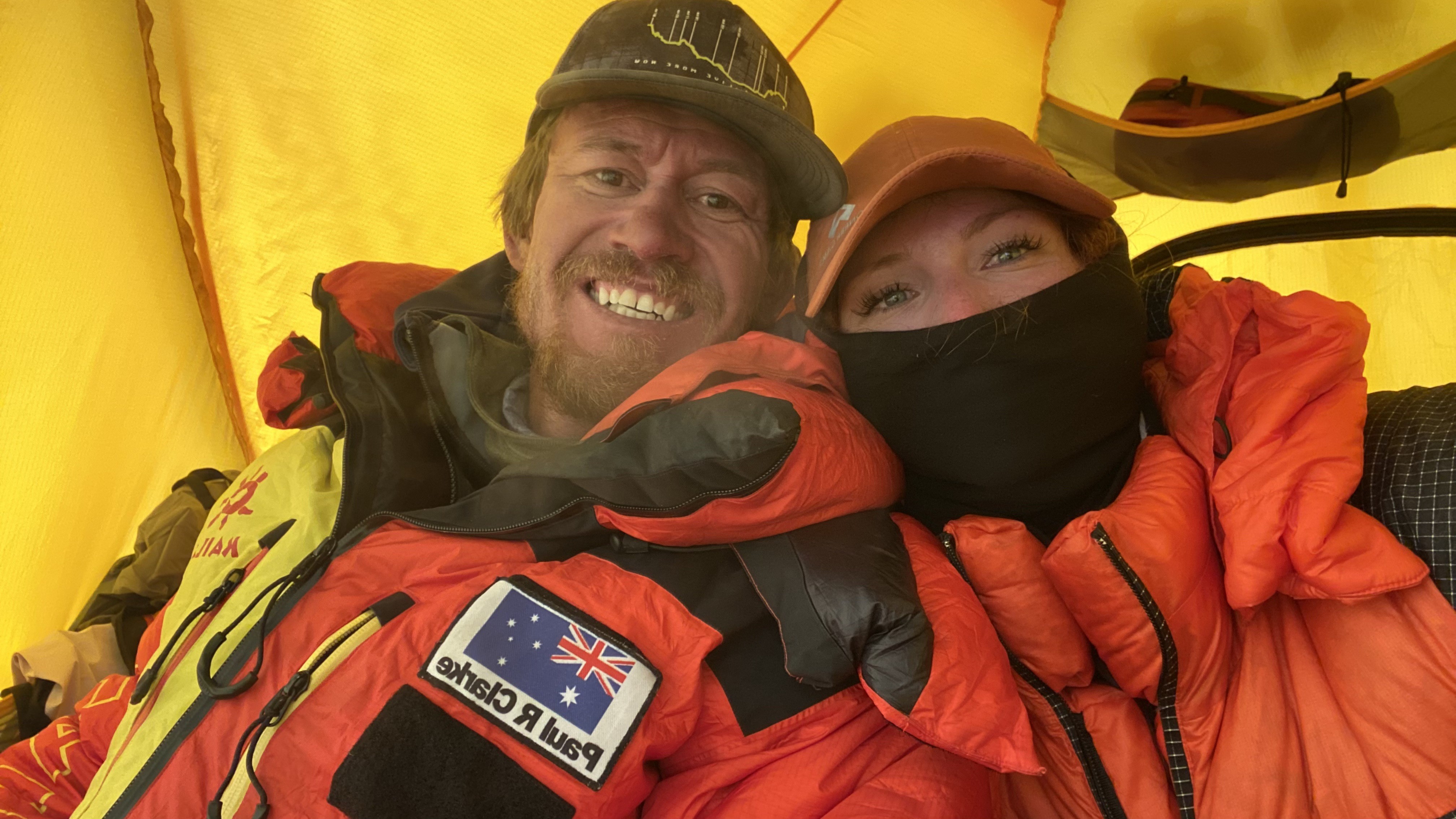
Unlike Camp 1, where a tent had already been prepared for us, we needed to establish our own camp.
We spent the next hour flattening snow, preparing a platform and pitching our tent while struggling to feel our fingers in the freezing conditions.
Once everything was secured, we finally crawled inside and started boiling water.
The remainder of the afternoon was spent melting snow, preparing food, organizing equipment and getting ready for our next climb.
The plan is to continue higher towards Camp 3, hopefully touching 7,000 meters before descending to Camp 2 to sleep.
After so much time at Base Camp, it's good to finally be gaining altitude.
Climb high, sleep low.
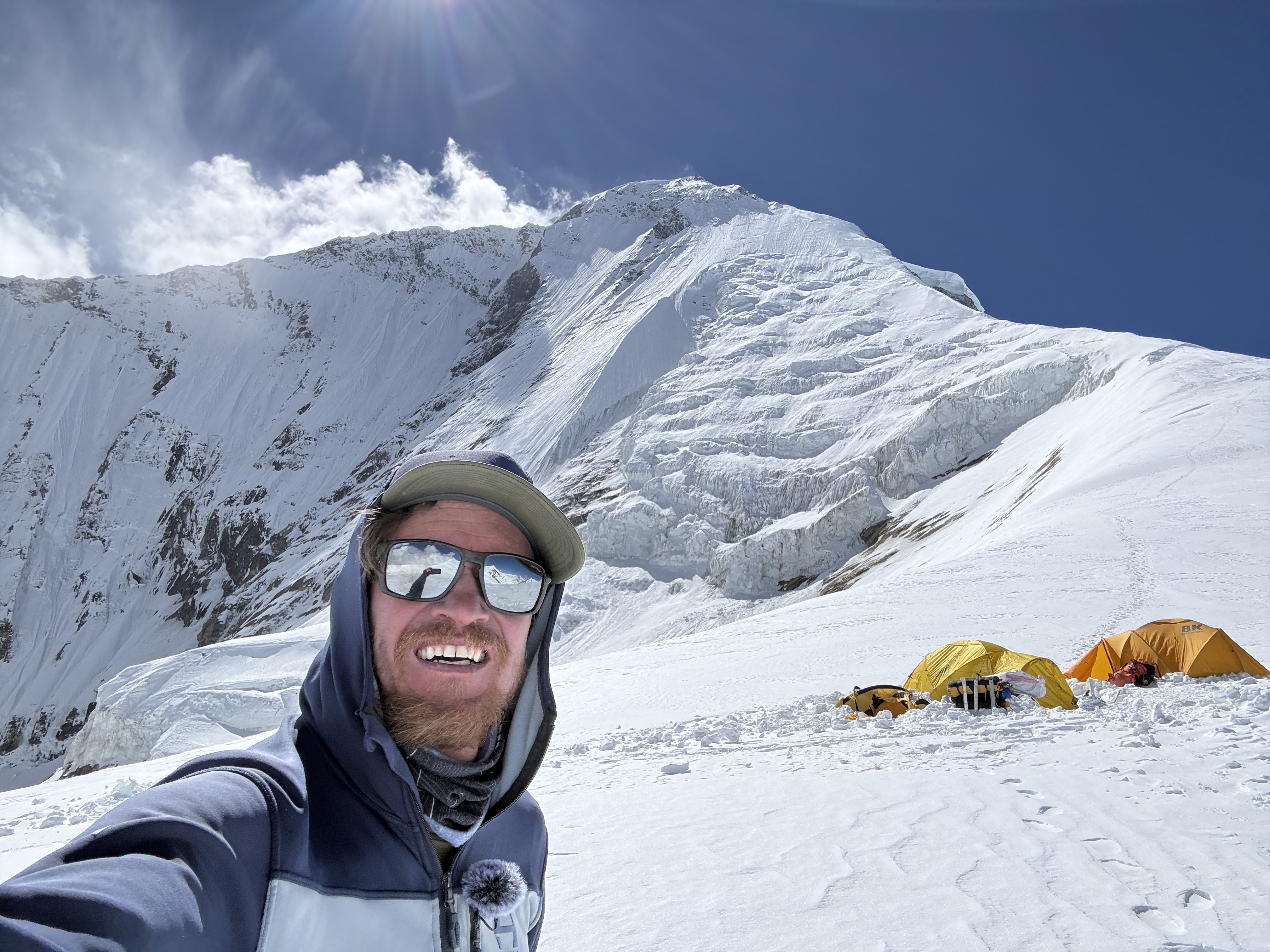

Camp 1 Dhaulagiri
Base Camp to Camp 1
After weeks of waiting at Dhaulagiri Base Camp, we're finally climbing.
Our alarms went off at 5:00 AM, and by 7:30 we were on the trail, heading towards Camp 1.
We crossed the glacier for approximately a kilometer before reaching the first wall, which involved around 200–300 vertical meters of climbing.
From there, we entered a long traverse beneath avalanche-prone slopes. We moved through this section as quickly as possible, thankfully without incident.
Once on the upper glacier, we had another two kilometers of walking before reaching the final major climb towards Camp 1, gaining approximately 700 vertical meters.
At around 3:00 PM, the sun disappeared behind Dhaulagiri, and the temperature dropped dramatically.
Within minutes, we were climbing in temperatures approaching -20°C.
We were still wearing relatively lightweight climbing clothing and weren't prepared for such a sudden temperature change. With Camp 1 only about an hour away, we decided to keep moving.
I reached camp around 4:30 PM, with Xenia arriving approximately 30 minutes later.
We were both freezing, and Xenia was showing signs of mild hypothermia after prolonged exposure to the cold.
I'd already prepared my sleeping bag for her. As soon as she arrived, we got her inside, and I started boiling water to fill Nalgene bottles to help warm her up.
Thankfully, she recovered quickly.
After some hot noodles, we settled into our sleeping bags for the night.
Tomorrow, we'll continue towards Camp 2, which should be a much shorter day.
After everything we've been through just to get onto this mountain, it feels incredible to finally be climbing again.


Dhaulagiri Base Camp
Finally Heading Up Dhaulagiri
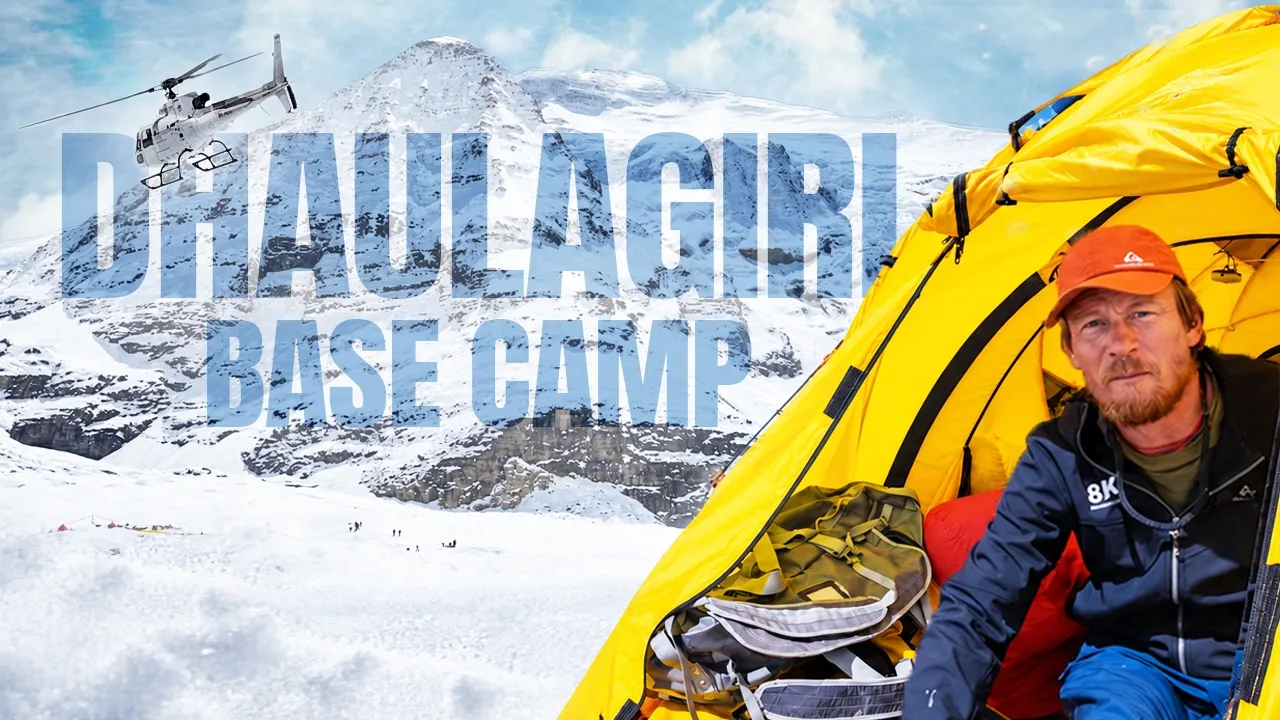
After weeks of waiting, tomorrow morning we're finally leaving Dhaulagiri Base Camp and heading onto the mountain.
The last couple of days have completely changed the atmosphere here. Teams have started returning to Base Camp after waiting out the storm in Pokhara and Kathmandu, and Dhaulagiri is beginning to feel like an active expedition again.
Among those returning is Polish Red Bull skier Andrzej Bargiel, who is planning an extraordinary attempt to summit Dhaulagiri and then ski all the way back to Base Camp without supplemental oxygen.
For Xenia and me, it's finally time to begin climbing.
Tomorrow morning we'll leave Base Camp and head for Camp 1, where we'll spend the night.
On Tuesday, the plan is to continue to Camp 2 at approximately 6,500 meters.
Then, if conditions allow, we'll leave Camp 2 on Wednesday and climb towards Camp 3 at approximately 7,400 meters. The goal isn't to spend the night there. We'll hopefully reach C3, spend around an hour resting and allowing our bodies to experience the thin air at that altitude, before descending all the way back to Base Camp.
Weather will be the deciding factor.
Monday and Tuesday are currently looking good, with blue skies forecast. Snow is expected to return on Wednesday, though, so we'll have to see whether conditions allow us to reach Camp 3.
After spending so long sitting at Base Camp watching the mountain, waiting for the snow to settle and wondering whether we'd even get another opportunity this season, it feels great to finally have a plan again.
Spirits are high, we're excited to get moving, and hopefully this rotation will put us back on track for a summit attempt later in the expedition.
For now, it's one step at a time.
Wish Xenia and me luck. 🏔️🏴☠️
Dhaulagiri Base Camp
After the Storm: Waiting on Dhaulagiri
Three days ago, Dhaulagiri Base Camp was buried under more than two meters of snow.
Since then, the storm has finally cleared.
We’ve had mostly blue skies, and with the sun reflecting off the glacier it has actually been incredibly hot during the day. After several days of constant snowfall and shovelling, it feels like a completely different place.
We’ve spent most of the last few days getting Base Camp back in order, digging out walkways, clearing around the tents and reorganising everything that disappeared under the snow.
Above us, the mountain has been very active.
We’re hearing and seeing avalanches coming down regularly around Dhaulagiri. We’re safe here in Base Camp, and in many ways it’s encouraging to see the mountain shedding some of the huge amount of snow that fell during the storm.
But we’re still a long way from knowing whether the route will be safe enough to climb.
For now, there is nothing to do except wait.
We need to give the mountain time to clear, allow the snowpack to settle and then reassess the conditions higher up.
Whether we get another chance to climb Dhaulagiri this season is still unknown.
Only time will tell.
For now, we wait.


Dhaulagiri Base Camp
More Than Two Meters of Snow at Dhaulagiri Base Camp
Another heavy night of snow has pushed the total snowfall at Dhaulagiri Base Camp beyond two meters during this storm.
We spent most of today shoveling, digging out tents, clearing walkways and trying to keep Base Camp functioning as the snow continues to accumulate around us.
The camp looks completely different from when we arrived. Tents are surrounded by deep snow and keeping everything accessible has become a full-time job for the small group of climbers and staff still remaining here.
For now, climbing isn’t the priority. We’re riding out the storm at around 4,700 meters and keeping the camp safe.
Even once the snowfall finally stops, we won’t be rushing back onto the mountain. There is now an enormous amount of fresh snow above Base Camp, and we’ll need to give it time to settle before reassessing conditions and deciding when, or whether, it’s safe to move higher.
For now, we wait. And shovel.


Dhaulagiri Base Camp
Buried at Dhaulagiri Base Camp
The storm has arrived at Dhaulagiri.
Over the last couple of days, the snow has been falling almost continuously at Base Camp. We had around 70 cm fall overnight alone, and by this evening I’d estimate there is close to 1.5 meters of snow in areas around camp that haven’t been constantly cleared.
Most of today has been spent shovelling.
We’ve been digging out tents, clearing walkways and repeatedly knocking snow off everything as it continues to accumulate. The tents are holding up well, but keeping on top of the snow has become a full-time job.
Base Camp is also getting very quiet.
There are now only six climbers remaining here, four of us with the 8K Expeditions team and another two with Pioneer. Most of the other climbers have left the mountain and are waiting in Pokhara or Kathmandu, hoping to return once the storm passes.
We made the decision to stay.
Leaving would mean giving up the acclimatization we’ve already gained at around 4,700 meters, followed by the long journey out and eventually another trek back into Base Camp. So for now, Xenia and I are riding out the storm here with the remaining team.
There is no possibility of climbing at the moment. Nobody is on the mountain, the earlier plan of making a quick trip to Camp 1 is gone, and we can hear avalanches regularly coming down around us.
Once the storm finally clears, we’re not planning to immediately start climbing.
The mountain needs time.
Our plan is to give it roughly seven to ten days, watch the avalanche activity, allow the new snow to settle and then reassess the route and conditions. Only then will we know whether Dhaulagiri is ready to be climbed again.
In one respect, the delay has changed the expedition back in our favour. The earlier weather window had us considering a very fast summit push, but that option has disappeared completely.
If the mountain settles and we can get back onto the normal route, we should once again have time for a proper rotation before making a summit attempt.
And that means the original goal remains: attempting Dhaulagiri without supplemental oxygen.
Right now, though, the summit feels a long way away.
For the next few days, our job is much simpler, keep the tents standing, keep shovelling, ride out the storm and wait to see what Dhaulagiri looks like when the snow finally stops.
Dhaulagiri Base Camp
Puja & Waiting on the Weather
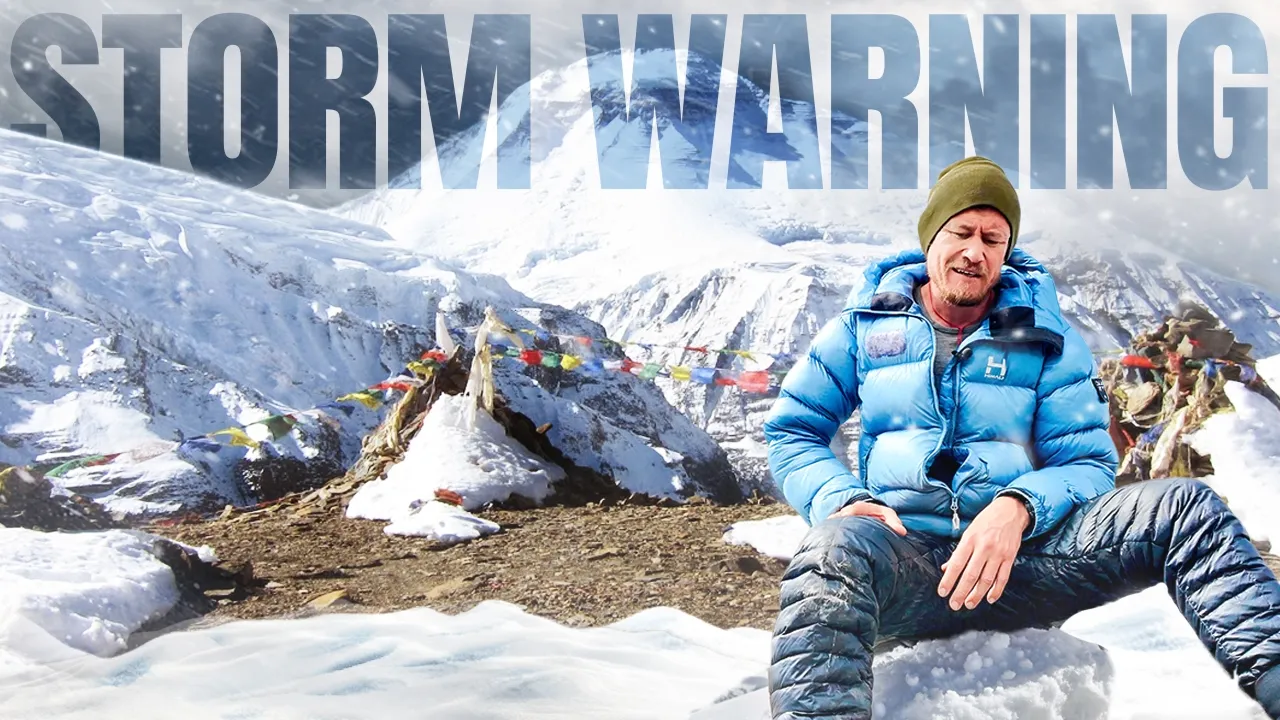
Yesterday we held our Puja ceremony here at Dhaulagiri Base Camp, a traditional Buddhist ceremony asking for safe passage on the mountain before we begin climbing.
It was a quiet, traditional ceremony and a great moment with the team after finally making it into Base Camp. Xenia also got some great photos, which we’ll add to the expedition gallery.
For now, though, nobody is climbing.
Around 60 cm (2 ft) of snow fell higher on the mountain, burying sections of the route and fixed ropes around Camp 1. Everyone who was on Dhaulagiri has now descended, and as I write this there is nobody above Base Camp.
We’ve had a few more centimetres of snow here over the last couple of days, although most of it has melted around camp. What we can hear constantly are avalanches coming down around the mountain.
There is a small possibility that we could make a quick trip to Camp 1 over the next few days if conditions improve, but at the moment that looks unlikely.
The bigger concern is the next weather system. Current forecasts are showing the potential for another 3–4 meters of snow around September 25–26.
So for now, the summit strategy is simple: wait.
We’re hoping we’ll eventually get a good rotation on the mountain, let the snow settle, and then reassess our summit plans. Our goal is still to attempt Dhaulagiri without supplemental oxygen if the mountain and weather give us the opportunity.
Until then, Xenia and I are hanging out at Base Camp, watching the weather, listening to the avalanches and waiting for Dhaulagiri to let us climb.


Dhaulagiri Base Camp
🚨 SUMMIT PUSH CANCELLED AS HEAVY SNOW HITS DHAULAGIRI 🚨
Yesterday we were preparing to move quickly up Dhaulagiri for an accelerated summit attempt.
Today, that plan is over.
We woke at Base Camp to pea-soup fog and heavy rain, while higher on the mountain more than 60cm (2ft) of snow fell overnight at Camp 1. The trail has disappeared, fixed ropes are buried and teams higher on the mountain have been forced to descend.
For now, our summit push is cancelled.
WHAT HAPPENS NOW?
If conditions improve, we may still move towards Camp 1 or Camp 2 to maintain our acclimatization and assess the mountain.
The bigger concern is another weather system forecast to potentially reach Nepal around September 26.
Forecasts can change, but some models are currently showing extraordinary snowfall around Dhaulagiri, potentially more than 4 meters (13ft) on the mountain, with significant snowfall possible even here at Base Camp.
If that happens, this becomes about more than whether we can summit. Safety at Base Camp itself becomes something we need to consider.
So for now, we wait, watch the forecasts and see what Dhaulagiri gives us.
Yesterday we were preparing to go up. Today the route is buried.
The plan lasts until the mountain changes it. 🏔️🏴☠️


Dhaulagiri Base Camp
THROUGH THE HIDDEN VALLEY TO BASE CAMP
THROUGH THE HIDDEN VALLEY TO BASE CAMP
September 18, 2026 — Dhaulagiri Base Camp, 4,700m
We left Marpha early on September 14 and drove roughly 1,200m higher to the trailhead, approaching Dhaulagiri Base Camp by essentially walking the Dhaulagiri Circuit backwards through the Hidden Valley.
For the trek in I was carrying my Hyperlite Halaka 55 and wearing my Scarpa Rapid XT approach shoes, a much better setup for the long approach than trekking in heavy mountain boots.
After an easy first afternoon at Yak Kharka (4,100m), day two was considerably tougher: 13.5km, 8.5 hours and around 1,500m of climbing through rain, cloud and cold.
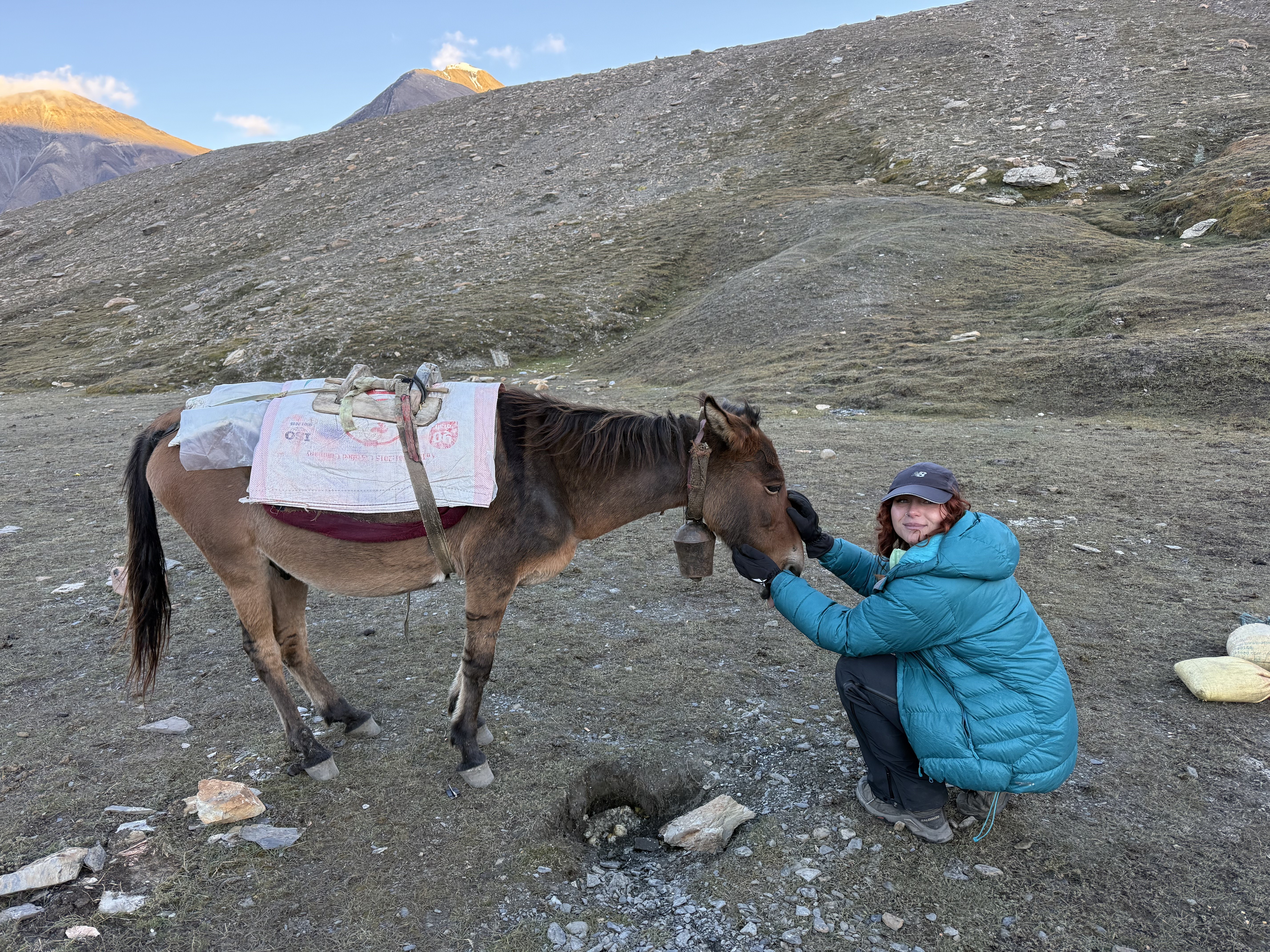
Along the trail we also stumbled across something completely unexpected, a human pelvis, followed by most of a skeleton further up the slope. The remains appeared to have been there for years and had possibly been exposed by a recent rockslide.
That night we camped at 5,100m in the Hidden Valley. Everything froze, around 50 pack mules rang their bells throughout the night, and my Garmin Fenix 8 rewarded me with a sleep score of 32.
The next morning couldn't have been more different. Blue skies followed us over French Pass at around 5,400m, where Dhaulagiri finally appeared directly in front of us for the first time. After months of planning, seeing the objective right there was pretty special.
Four and a half hours after leaving camp, we descended into Dhaulagiri Base Camp at 4,700m.
We've now had two days here eating, sleeping, sorting gear and getting ready to climb. Conditions currently look excellent, with relatively little recent snow, and the rope-fixing team has reached Camp 2.
But our plan has changed.
A typhoon is approaching, with the current forecast indicating potentially 3m+ of snow from September 25. Instead of completing a normal acclimatisation rotation, we're going to make one continuous push and try to summit on September 24 before the storm arrives.
Tomorrow we leave for Camp 1, then Camp 2, Camp 3 and hopefully the summit.
We're still hoping to climb without supplemental oxygen, but we'll cache bottles higher on the mountain and make that decision at Camp 2 based on how we're performing.
Coming back to Dhaulagiri after being stopped around 7,300m last year feels special. Since then I've climbed another four 8,000m peaks and gained a huge amount of experience.
I'm feeling good, confident, and ready to give this mountain another shot. 🏔️🏴☠️



Marpha
BACK IN MARPHA
After weeks of preparation, the journey back to Dhaulagiri is finally underway.
Yesterday started with a 4:00am alarm in Kathmandu, followed by an early flight to Pokhara and a five-to-six-hour drive into the Mustang region. After a stop for dal bhat along the way, we eventually arrived back in Marpha at 2,657 meters.
I’ve been here before, so it feels good to be back. Marpha is a beautiful little mountain town, famous for its apples, and we’re spending a couple of nights here before beginning the trek towards Dhaulagiri Base Camp.
Today was deliberately easy. We walked around town, climbed up to one of the temples above Marpha and otherwise took the opportunity to rest and acclimatize.
Physically I’m feeling great. I feel strong, confident and, more than anything, ready to finally get moving towards the mountain.
Our climbing team is starting to come together too. Xenia and I are here alongside Pablo and his daughter Jess, with Nawang and Raj among the Sherpa team supporting us.
This afternoon I also went live from Marpha for around 90 minutes, catching up with a lot of the Outdoor Pirate regulars and talking through the expedition, the journey ahead and what to expect over the coming weeks.
Tomorrow the waiting ends.
We start trekking towards Dhaulagiri Base Camp.

PRE-EXPEDITION
Kathmandu, Nepal
Final Preparations in Kathmandu
Final preparations are underway in Kathmandu before we begin the journey into Dhaulagiri Base Camp. This year I'm returning to the mountain with a very different objective: attempting to climb Dhaulagiri without supplemental oxygen.
After Khan Tengri, I've had a couple of weeks to recover, eat and get everything ready for the expedition. The kit going in includes my Hyperlite Halaka 55 for the approach, Scarpa Rapid XT shoes for the trek, and the Starlink Mini setup I'll use at Base Camp with my UGREEN batteries and FlexSolar 100W panel.
In the next few days we'll leave Kathmandu and begin the trek into Base Camp with the 8K team.
One year after an avalanche ended my first attempt, it's almost time to go back.
FIELD NOTES / PHOTOGRAPHS
FROM THE EXPEDITION

Dhaulagiri Base Camp
Me and Dhauli
I always love a mountain dog. I dont know where she came from but she was fun to hang out with for a few days.

Dhaulagiri BC
High Vibes in BC

Dhaulagiri
Lunch break between BC and C1
A much needed lunch break on the glacier below C1

Dhaulagiri C1
The A Team
Vincere🇸🇬 , Me 🇦🇺 and Nadia 🇵🇰 have a small time to rest in C1 in the moring before pushing up to C2

Dhaulagiri Camp 1
Departing C1
As Vincere and the other climbers decided to C1 I pushed up to C2 with the Sherpa team to asses the route
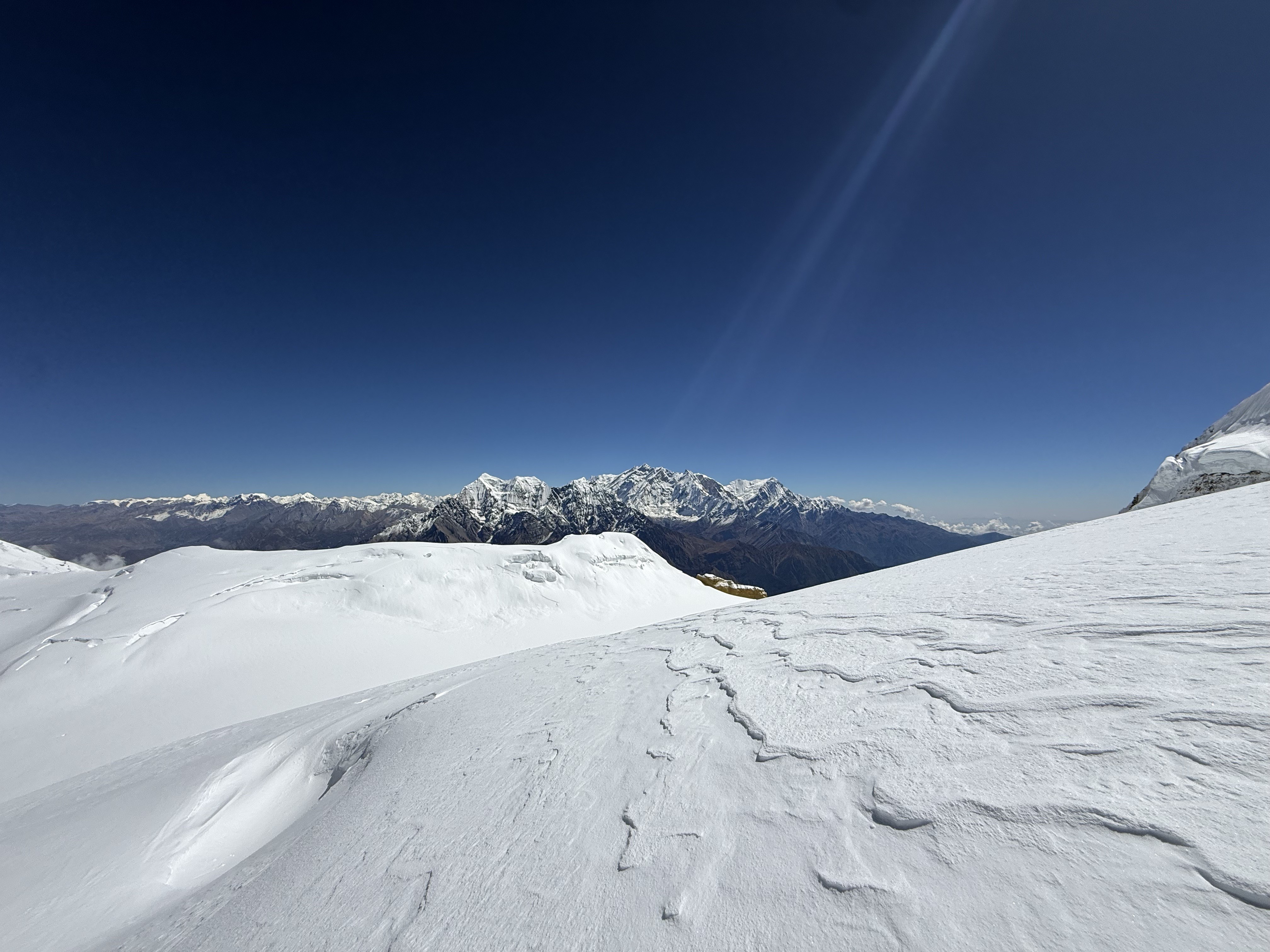
Dhaulagiri Camp 2
the last shot
this was the last photo i took on Dhaulagiri from Camp 2 looking over at Annapurna 1
MOUNTAIN DETAILS
ALTITUDE
8,167
M
COUNTRY / REGION
Nepal
ROUTE
Normal Route
OPERATOR / GUIDE
8K Expeditions
CONTINENT
Asia
MOUNTAIN RANGE
Himalaya
https://youtu.be/YpmlRBd8vhQ
