How Do I Acclimatize for High Altitude?
From getting horribly sick on Mount Whitney to linking multiple 8,000m expeditions without repeating traditional rotations, this is what I've learned about acclimatization, and why fitness can never replace time at altitude.

CHAPTER 1
One of the biggest lessons I've learned from climbing at altitude is that you can't cheat acclimatization.
You can be incredibly fit. You can have all the right equipment. You can be mentally prepared and motivated to suffer.
But if your body isn't acclimatized, it isn't acclimatized.
I learned that lesson fairly early in my climbing life—and I learned it the hard way.
You Can't Cheat Acclimatization
One of my first real experiences with altitude was climbing Mount Whitney in California.
Whitney is 4,421m (14,505ft), the highest mountain in the contiguous United States. A few days earlier we'd been in Death Valley, including Badwater Basin, which sits 86m (282ft) below sea level. National Park Service
We basically did everything wrong.
We drove to the Mount Whitney trailhead, slept there and then decided to climb the mountain in one push because that sounded like a good idea.
It wasn't.
I was incredibly sick.
I remember being dizzy and getting that feeling you sometimes have when you stand up too quickly and your vision starts tunnelling in. Except it wasn't happening for a few seconds, it seemed to be happening for much of the climb.
I vomited a couple of times. I didn't really understand what was happening to me.
Somehow, we still made it to the summit.
When I got there, I basically just lay down and went to sleep until my friends were ready to descend.
By the time we eventually got back to the car park after something like a 15–17 hour day, I felt great again.
At the time, I didn't really understand what had happened.
Looking back now?
Wow. That was stupid.
The dizziness, nausea and vomiting I experienced are all consistent with symptoms that can occur with acute mountain sickness after a rapid ascent, and improvement following descent is also characteristic of altitude illness. CDC
That experience opened my eyes to something I've continued learning about ever since.
Fitness Is Not Acclimatization
This is probably the biggest misconception I hear.
I'm extremely endurance fit. I've run marathons and competed as a semi-professional Ironman triathlete.
That fitness is enormously valuable in the mountains.
When I'm climbing above 6,000m, my cardiovascular system isn't necessarily working as hard at a given pace as someone without the same endurance base. I can move efficiently for a long time, recover and get up the next morning and do it again.
But none of that means I'm automatically acclimatized.
Research and high-altitude medical guidance make the distinction pretty clear: physical fitness does not protect an unacclimatized person from altitude illness. CDC
In fact, being fit can create another problem.
You can physically climb faster than your body should ascend.
I know I'm a fast climber. I can keep up with Sherpas and sometimes climb faster than them.
But that doesn't mean I should just keep going higher.
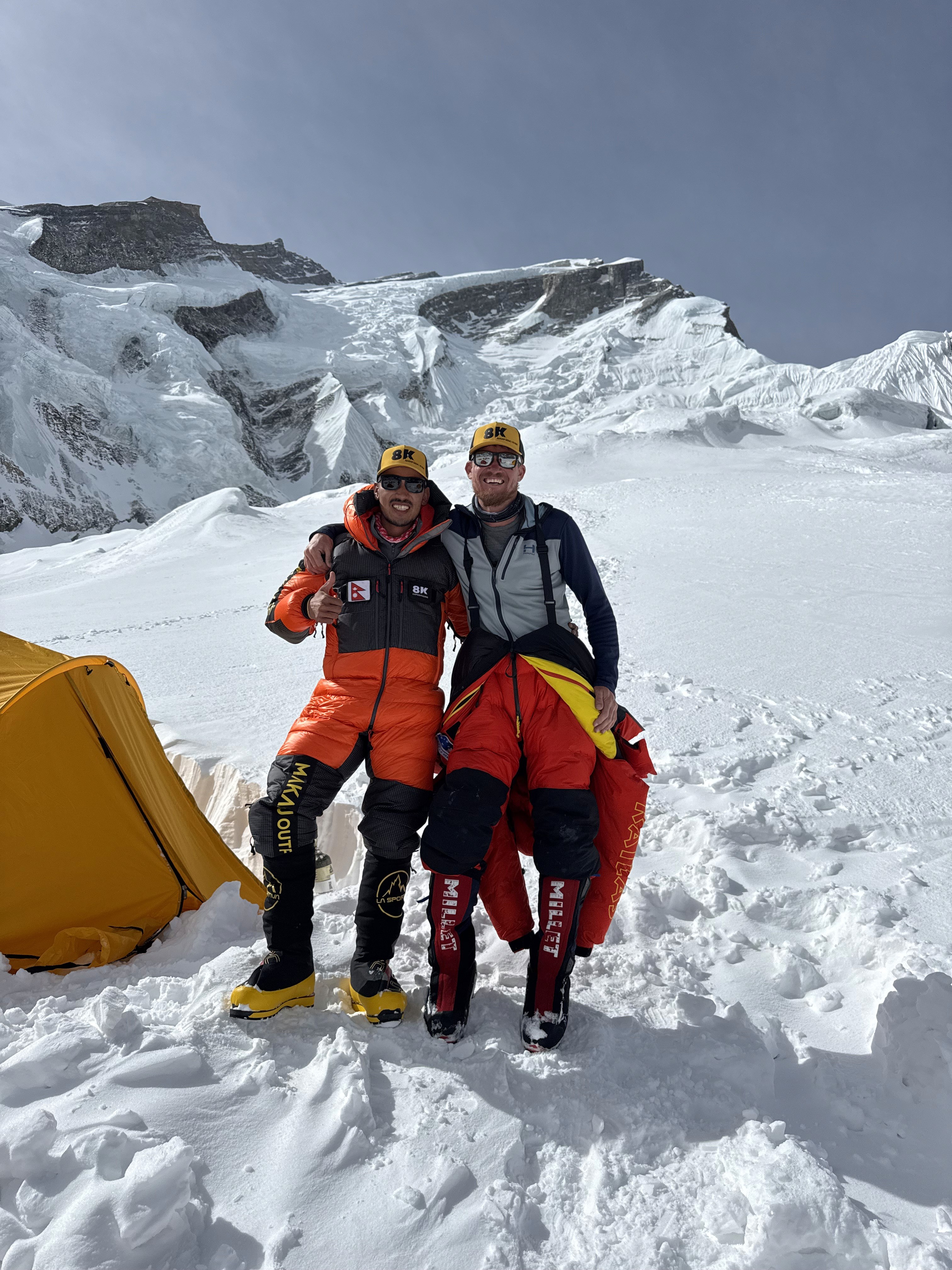
We normally set an objective for the day and stop there. On a rotation, that might mean we're going to Camp 3 or Camp 4 and that's where the day ends, even if physically I feel capable of continuing.
Your legs might be saying yes.
Your acclimatization schedule might still be saying no.
There Is No Shortcut
If you're planning your first high-altitude mountain, the most important thing I can tell you is:
Give yourself enough time.
You can't rush acclimatization.
There isn't an old wives' tale, supplement or magic trick that's suddenly going to make your body acclimatized.
There are established strategies and medications that can help reduce altitude-illness risk in appropriate circumstances, but gradual exposure and time remain fundamental. Current guidance recommends staged ascent and conservative increases in sleeping altitude once you're above 3,000m. CDC
My own five basic rules are simple:
Be fit.
Don't rush it.
Hydrate.
Sleep.
Listen to your body.
And if you're developing symptoms of altitude illness, don't convince yourself that being tough means pushing higher. Medical guidance is very clear that you should not ascend to a higher sleeping altitude while symptomatic, and worsening symptoms despite rest or treatment mean descent.

CHAPTER 2
How I Acclimatize
Over the years I've learned how my own body responds to altitude.
One of the first things I notice when arriving high is that everything goes a little out of whack.
My resting heart rate changes. My sleep deteriorates. Breathing feels harder. Normal activities require more effort.
Then, night after night, things begin moving back towards normal.
I wear a Garmin Fenix 8, and I pay attention to resting heart rate, sleep score and SpO₂.
I don't treat the watch as a medical instrument. Wrist-based SpO₂ in particular isn't something I regard as perfectly accurate.
What I find useful is watching the trends alongside how I actually feel.
My sleep starts improving.
My resting heart rate begins returning towards baseline.
Breathing becomes easier.
I'm no longer huffing and puffing doing everyday things around camp.
That's when I can feel my body adapting.
I Like to Sleep High
There's a common mountaineering expression:
Climb high, sleep low.
And we certainly use that strategy.
On Dhaulagiri, for example, one of our planned rotations was to climb to Camp 2, spend two nights there, climb up and touch Camp 3, and then return to sleep at Camp 2 before descending to Base Camp.
On smaller mountains, I use the same principle.
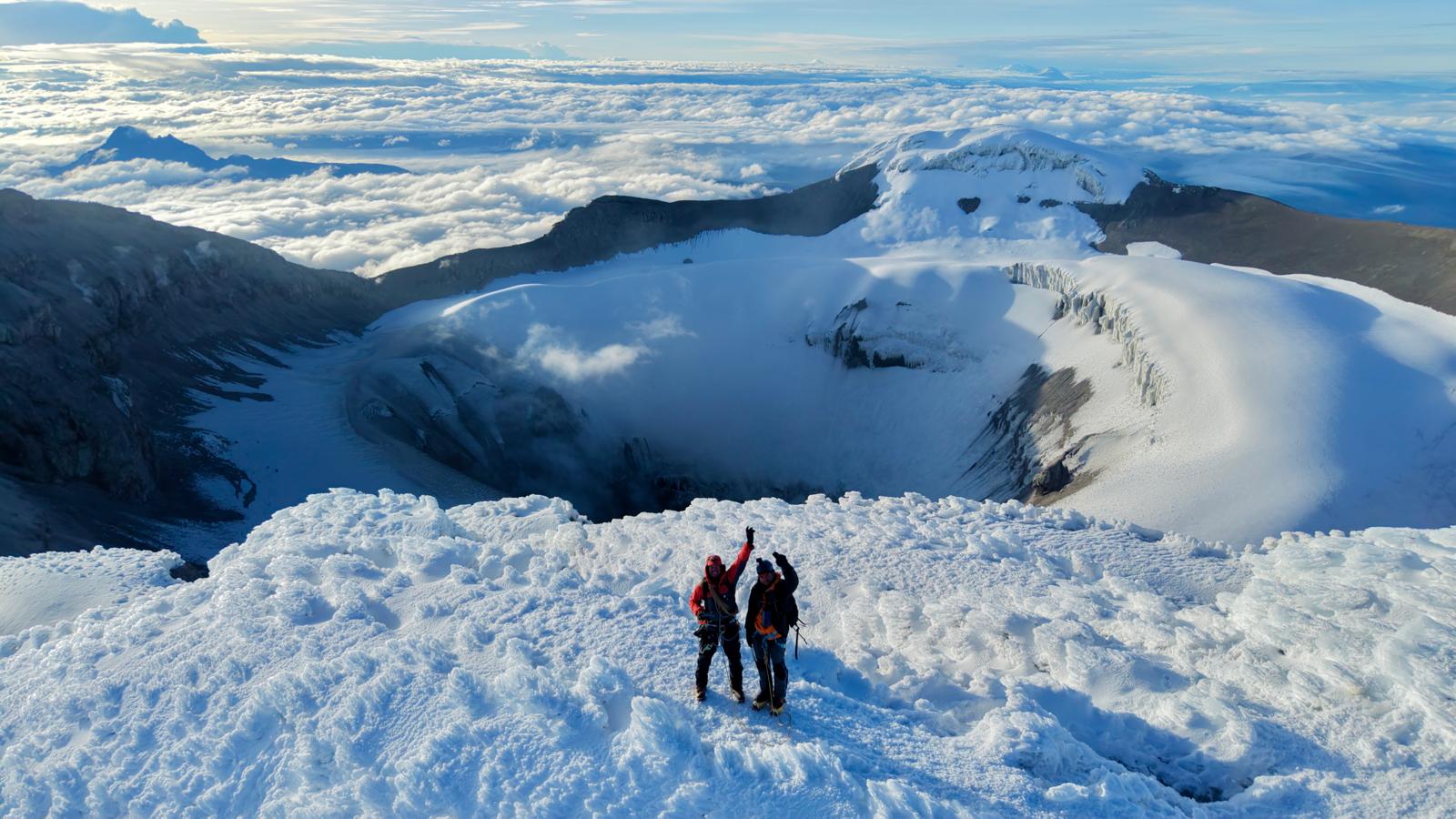
If I'm staying at a refuge, I'll often arrive, drop my pack, have something to drink and then climb another 200–300 vertical metres that afternoon before returning to the refuge to sleep.
But personally, I also like sleeping high.
On rotations I generally want to get high and stay high. Although “sleeping” is sometimes a generous description of what happens, you can spend a lot of the night tossing and turning in your sleeping bag waiting for the sun to come up.
Sleep disturbance is extremely common at altitude and generally improves as acclimatization progresses. CDC
6,000m and 7,000m Are Different Games
From my experience, there's a big difference between preparing for a relatively straightforward 6,000m mountain and a 7,000m expedition.
I've climbed some 6,000m peaks relatively quickly after arriving from lower elevations, using a staged approach and progressively higher sleeping altitudes.
A 7,000m mountain is a different game for me.
Coming from sea level, I'd normally think in terms of a multi-week process involving Base Camp, rotations, sleeping progressively higher and then returning to Base Camp to recover before the summit push.
There's no universal schedule that works for everybody, and medical recommendations for recreational high-altitude travel are generally more conservative than some expedition schedules. Individual susceptibility varies enormously. CDC
The important point isn't copying my exact schedule.
It's understanding that the higher you go, the more seriously you need to treat acclimatization.
South America Was Everest Training
Before Nepal in 2026, I spent the better part of four months climbing through South America and Mexico.
That entire period was deliberately designed around what was coming next.
I wanted fitness.
I wanted more mountain skills.
And I wanted acclimatization.
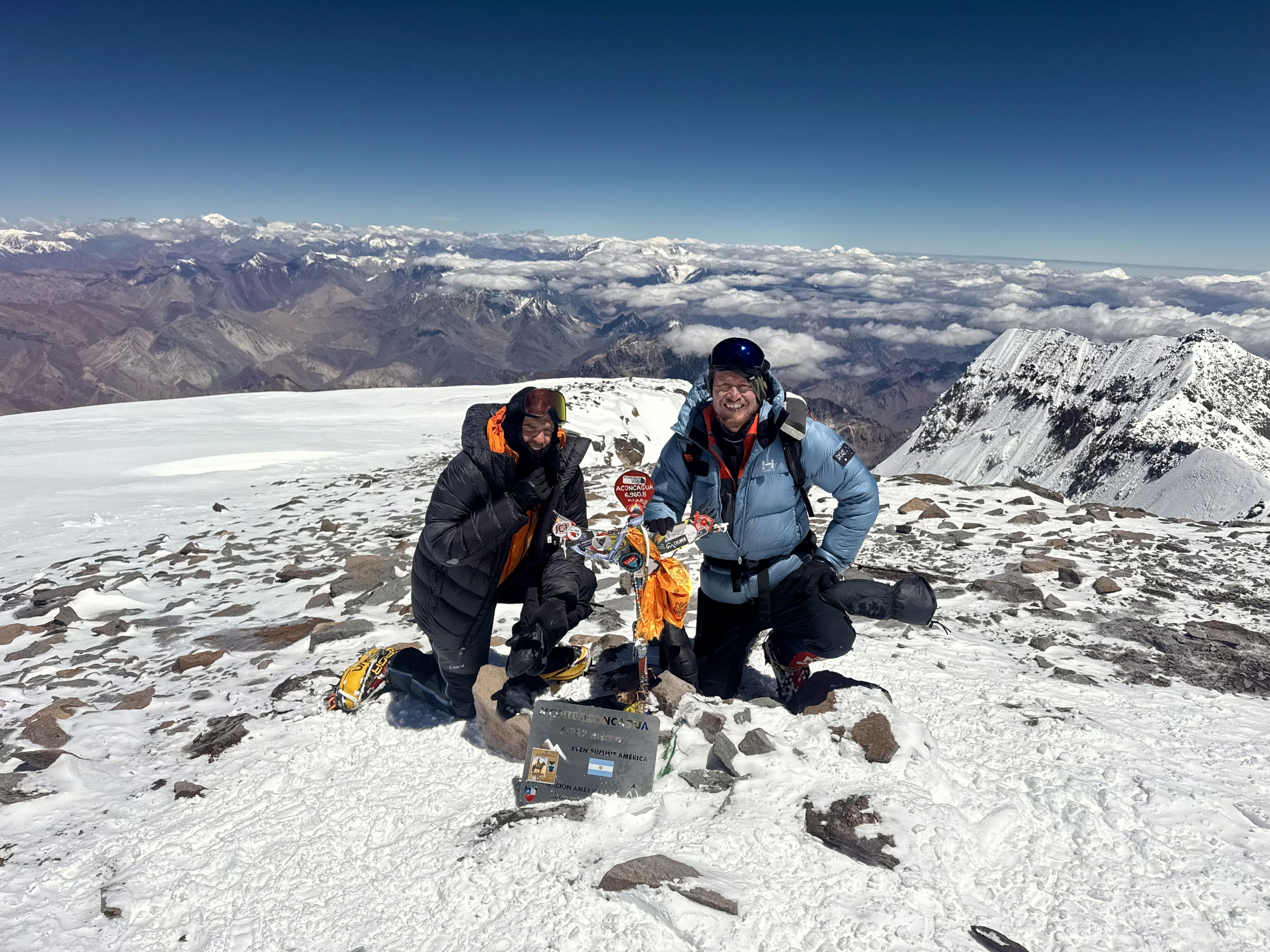
I climbed repeatedly at altitude through Ecuador, Chile, Argentina, Bolivia and Mexico before flying to Kathmandu.
By the time I arrived in Nepal, Kathmandu at around 1,400m was one of the lowest elevations I'd experienced for months.
Then came Annapurna.
Then Makalu.
By that point I had climbed two 8,000m mountains that season.
After Makalu, we'd originally considered going directly to Everest Base Camp, but the weather made it look like we'd simply sit there for about ten days.
So we changed the plan.
We flew back to Kathmandu, checked into a nice hotel, ate at our favourite restaurants and recovered for roughly a week.
Then we flew directly to Everest Base Camp.
We spent about two nights there.
And then we started our summit push.
No Everest acclimatization rotations.
I felt great.
I felt strong.
I felt ready.
But that wasn't because I didn't need to acclimatize for Everest.
I'd already done the acclimatization somewhere else.
Months of climbing in South America had started the process, followed by Annapurna and Makalu.
Everest was simply the next mountain.
Oxygen Doesn't Replace Acclimatization
Supplemental oxygen adds another variable.
Every 8,000m mountain I'd climbed before Dhaulagiri had involved supplemental oxygen, but when I started using it depended significantly on how acclimatized I was and the strategy we were using.
Annapurna is a good example.
Despite coming from South America, I wasn't yet acclimatized to the level I wanted for an 8,000m summit. We only completed one real rotation before the summit push, so I started using supplemental oxygen at around 7,000m.
Everest was completely different.
By then I'd already climbed Annapurna and Makalu.
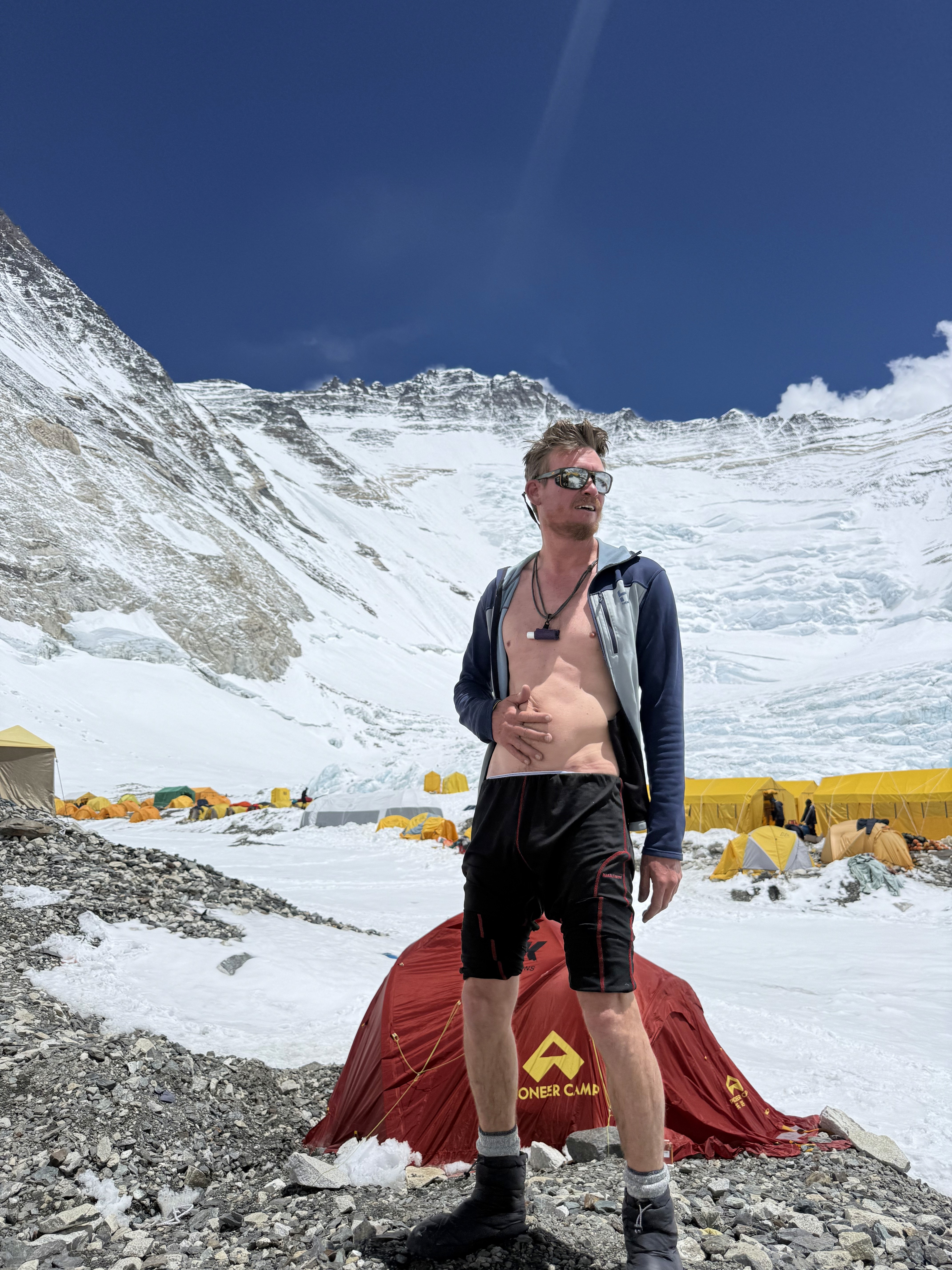
I didn't start using oxygen until passing Lhoste Camp 4 at roughly 7,800m, while some other climbers were using it considerably lower on the mountain.
For Dhaulagiri, the goal has been different again: attempting the mountain without supplemental oxygen.
That makes getting the rotations and acclimatization right even more important.
For me, oxygen is therefore not a substitute for acclimatization.
It's another tool within a climbing strategy.
CHAPTER 3
Banking Acclimatization
This is probably the biggest change in the way I approach expeditions now.
I've started deliberately banking acclimatization from one mountain and carrying it into the next.
Acclimatization is often the longest and slowest part of climbing a big mountain.
The actual summit push on an 8,000er might take four days.
The acclimatization can take four weeks.
So if I can structure several mountains together, I can potentially avoid repeating that entire process every time.
That's become a major consideration when I build my climbing calendar.
South America flowed into Nepal.
Then:
Annapurna → Makalu → Everest → Lhotse.
Later:
Khan Tengri → Dhaulagiri.
It's much more efficient than returning to sea level for months between every expedition and starting from zero each time.
How Quickly Do You Lose It?
This is one of the interesting questions.
Acclimatization certainly begins fading after you descend, but it doesn't disappear instantly. Evidence also supports the idea that recent altitude exposure can provide useful pre-acclimatization; current CDC guidance notes that spending at least two nights above 2,750m within the preceding couple of weeks can be beneficial, with more recent exposure generally being better. CDC
I experienced that very clearly coming from Khan Tengri to Dhaulagiri.
We'd spent almost four weeks on Khan Tengri and then had more than two weeks before getting into Dhaulagiri.
During the trek in, we had to cross French Pass at around 5,400m.
The first day I could feel that I'd been lower. I was a little more winded and tired.
But it came back incredibly quickly.
By the time we crossed French Pass, we were moving very strongly. Looking around at climbers who had recently arrived from much lower elevations, the difference was obvious.
My body remembered.
I wouldn't pretend there's a simple equation like “four weeks to acclimatize means exactly four weeks to lose it.” The physiology is more complicated than that.
But my experience has convinced me that recent acclimatization has enormous value, particularly when you return to altitude quickly.
Hydration Matters
I also put a lot of effort into hydration when I'm high on the mountain.
If I'm moving between camps, I'll normally wake up with a one-litre Nalgene that has spent the night inside my sleeping bag so it doesn't freeze.
I'll try to drink that entire litre in the morning.
We'll boil more water for breakfast. I'll normally have a coffee, refill the Nalgene and carry that during the day's climb, usually with a couple of electrolyte tablets in it.
At the next camp we'll melt more snow and I'll try to drink another litre, along with fluids from soup, noodles and dinner.
On the mountain I'm normally trying to get at least three to four litres of fluid per day.
That's what works for me during heavy expedition days, not a universal prescription. In fact, altitude medicine guidance specifically cautions that forced over-hydration has not been shown to prevent altitude illness. WMS
The objective for me is simply not becoming dehydrated while I'm breathing heavily, working hard and losing moisture in an extremely dry environment.
What About Diamox?
I've never personally used Diamox, acetazolamide, but I know plenty of climbers who do.
I don't bash it.
If somebody needs it and it's medically appropriate for them, it's a proven tool for accelerating acclimatization and preventing or treating acute mountain sickness. It also increases bicarbonate loss in the urine, which is part of how it stimulates ventilation and improves oxygenation. CDC
It's simply never been part of my personal strategy.
Medication decisions are something I'd discuss with a doctor familiar with altitude medicine rather than copying what another climber does.
What About Altitude Tents?
I've never used an altitude tent either.
I'm rarely in one place long enough for one to make much sense.
If I went home to Australia for an extended period and then planned to fly directly to an 8,000m expedition, I'd certainly consider researching one.
I know climbers who use them and like them.
Evidence suggests hypoxic tents can provide some pre-acclimatization benefit, but meaningful exposure appears to require long periods, around eight or more hours per day, repeated over weeks, rather than occasional short sessions. WMS
I'm much less convinced personally by the trend of doing short workouts in simulated-altitude gyms.
I'd rather spend that time actually living and climbing at altitude when I have the option.
Listen to Your Body
After all the expeditions, watches, rotations, oxygen strategies and thousands of metres of climbing, I keep coming back to something incredibly simple:
Listen to your body.
Headaches happen.
I've experienced dizziness and upset stomachs.
Sleep can be terrible.
But I've learned what normal acclimatization feels like for me and, more importantly, when something doesn't feel right.
Severe altitude illness is not something to “push through.” Confusion, loss of coordination and severe breathlessness can indicate life-threatening high-altitude cerebral or pulmonary edema and require urgent action, typically descent and medical treatment. CDC
No summit is worth ignoring that.
If you're preparing for your first 5,000m or 6,000m mountain, you don't need to copy the way I acclimatize after years of high-altitude climbing.
You need to give yourself time.
Build a conservative itinerary.
Get high gradually.
Pay attention to how you feel.
And don't allow your fitness or your desire to reach the summit to convince you that you can cheat physiology.
Because you can't.
Be fit. Don't rush it. Hydrate. Sleep. Listen to your body.
And remember:
If you're not acclimatized, you're not acclimatized. It's that simple.
Want to See What I Actually Use?
I've put together the clothing, climbing equipment, electronics and other gear I actually use on high-altitude expeditions.