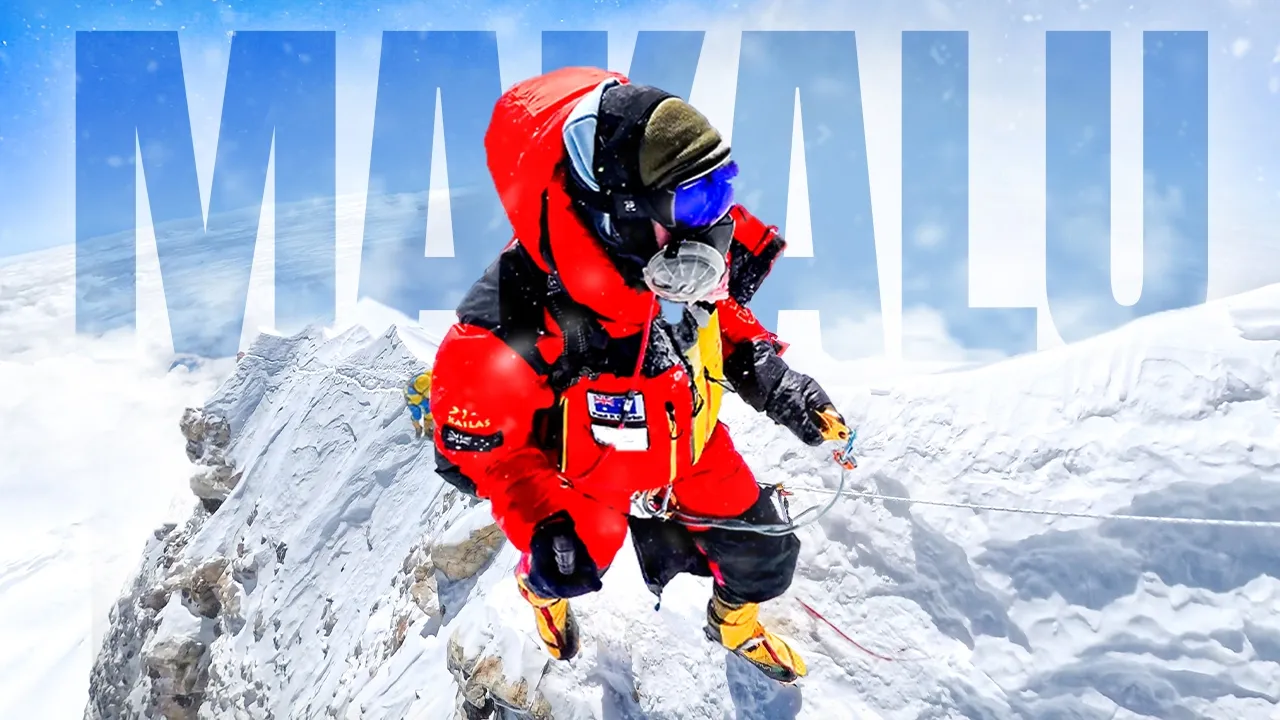

EXPEDITION OVERVIEW
STATUS
SUMMITED
EXPEDITION YEAR
2026
SUPPLEMENTAL OXYGEN
WITH O2
STRAIGHT FROM ANNAPURNA
Makalu wasn’t a standalone expedition.
It was the next move in a much bigger Himalayan spring.
I’d summited Annapurna on April 18 and returned to Kathmandu exhausted and roughly five kilograms lighter.
There wasn’t much time to recover.
I had about four days to rest, eat as much as possible and get myself ready to go back into the mountains.
Somewhere in the middle of that was my birthday. Ashok and the 8K team surprised me with a cake, and what was supposed to be recovery involved a few too many beers.
I did make one significant gear change while I was back in Kathmandu. After climbing Annapurna in my old Millet 8,000-meter boots, I switched to the La Sportiva Olympus Mons Pro. They were a much more modern and noticeably lighter boot, and Makalu would be my first chance to use them on an 8,000-meter summit.
Then it was time to leave again.
Makalu made sense because I was already acclimatized from Annapurna. Rather than spending weeks building acclimatization again, I could carry that fitness directly onto the world’s fifth-highest mountain.
We flew from Kathmandu to Lukla to refuel, continued to Dingboche to drop weight, and then began ferrying people two at a time toward Makalu Base Camp.
The helicopter crossed a mountain pass above 6,000 meters before dropping us onto a barren glacier at around 5,900 meters.
Makalu Base Camp was unlike anywhere I’d stayed before.
High. Cold. Barren.
There wasn’t much reason to be there other than to climb.
Which suited me perfectly.
The plan was simple:
Get in. Climb Makalu. Get out.
NO ROTATIONS
Normally, arriving at an 8,000-meter Base Camp is the beginning of weeks of acclimatization.
For me, Makalu was different.
Annapurna had already done the work.
I arrived at nearly 5,900 meters acclimatized and ready to move.
There would be no traditional rotations.
Ashok was climbing with me again, and by this point our relationship felt less like client and Sherpa and more like climbing partners. I carried my own equipment and we worked together on the mountain.
For Makalu I was using my Hyperlite Halaka 55 again. It gave me enough room for the technical kit, food and extra layers without carrying more pack than I needed for what was going to be a fast push.
Victor had also rejoined the expedition, and at Base Camp I met Saeed from the UAE, who would go on to become a good friend.
Our plan was unusually direct:
Base Camp → Camp 2 → Camp 3 → Summit.
That was it.
Because we expected to be on the mountain for only a few nights, the Starlink Mini stayed at Base Camp this time. Unlike Annapurna, there was no reason to split the extra power and solar equipment between the team for such a short assault.
Makalu is one of the more technical 8,000-meter mountains, and the upper route would include the long climb toward Camp 3, the French Couloir and an exposed summit ridge.
But physically, I felt strong.
Instead of spending weeks looking up at the mountain waiting to acclimatize, almost immediately we were preparing to climb it.
FROM LAST TO FIRST
The first stage of the climb couldn’t have gone much better.
We left Base Camp under blue skies and climbed toward Camp 2. On the lower mountain I was still in my Arc’teryx Beta shell and Mountain Hardwear softshell pants, keeping the heavier summit clothing packed away until we moved higher.
The following morning we left Camp 2 at around 7am for Camp 3, with roughly 1,000 meters of vertical gain ahead of us.
The route became steadily steeper as we climbed, and by the time we reached Camp 3 shortly after 3pm there wasn’t much time to recover.
I changed into my Kailas 8,000-meter summit suit, ate, drank and crawled into my Rab -40 sleeping bag for a few hours of rest.
At around 9pm, Ashok and I left Camp 3 for the summit using supplemental oxygen from the start.
We were the last team to leave.
Ahead of us were roughly eight climbers and their Sherpas.
Slowly, we began catching them.
One team at a time.
By the time we reached the upper mountain, we’d gone from the back of the group to the front.
Ashok and I began taking turns breaking trail.
I felt incredibly strong, stronger, in fact, than I’d felt anywhere else above 8,000 meters.
But Makalu still had its hardest climbing ahead.
THE FRENCH COULOIR
Makalu becomes a very different mountain near the top.
The terrain steepens and the route becomes increasingly technical as it enters the French Couloir.
At night, high above 8,000 meters, it felt endless.
This was where the climbing kit really came into play. I was moving in my Petzl Sarken crampons, clipped into the fixed lines with my Blue Ice harness and Petzl ascender, with my Petzl Sum’Tec in hand and Black Diamond Vapor helmet on.
My Petzl Actik Core was lighting the route ahead as we climbed through the darkness.
Some of the fixed ropes were frozen or buried beneath the snow, slowing us down as we searched for the route and worked our way upward.
Then, at around 4:30am, dawn began to arrive.
After climbing through darkness for hours, the first sunlight brought warmth back to the mountain.
It was one of those small moments that feels enormous at altitude.
We kept climbing.
Eventually, what looked like the summit appeared above us.
I thought we were almost there.
Ashok climbed ahead and disappeared over it.
Then I reached the top.
It wasn’t the summit.
There were still another three or four hundred meters to go.
Makalu had given us a false summit at more than 8,000 meters.
There wasn’t much to do except laugh at how ridiculous it felt and keep climbing.
Beyond it waited the summit ridge.
And the wind.
8,485 METERS
The final summit ridge was exposed and brutally windy.
Gusts were reaching more than 70 kilometres per hour as Ashok and I moved along the ridge toward the highest point.
This was where my high-altitude clothing really earned its place. I was in my Kailas 8,000-meter summit suit, with my Mountain Hardwear Absolute Zero mitts protecting my hands and Julbo Lightyear OTG goggles shielding my eyes from the wind and blowing snow. The conditions were brutal, but that combination worked incredibly well.
We’d started the summit push as the last team out of Camp 3.
Now we were at the front.
At around 10:15am on May 3, we stepped onto the summit of Makalu.
8,485 meters.
Ashok and I were the first climbers to reach the summit that morning.
There was no long celebration.
The wind made sure of that.
We stayed for only three or four minutes.
From the summit I could see across toward Everest and Lhotse.
Those mountains were next.
Victor was still climbing below us. About an hour into our descent we passed him just beneath the summit.
We hugged, I told him to keep going, and then Ashok and I continued down.
Annapurna had been my second 8,000-meter summit.
Makalu was number three.
The idea of climbing all fourteen was starting to feel less like an abstract ambition and more like something I might actually be capable of doing.
INTO THE CLOUDS
The descent through the French Couloir was much faster.
Much of it could be rappelled.
But lower on the mountain, another problem appeared.
Cloud moved across the upper glacier and visibility disappeared.
There were no fixed ropes through sections of the glacier.
Instead, the route was marked by flags.
At times we could only wait for the cloud to clear enough to see the next marker, move toward it, then stop again.
Somewhere above us, another climber had run out of oxygen.
Ashok carried three oxygen bottles back higher on the mountain to help.
It was another reminder that the summit doesn't end the expedition.
Eventually we made it safely back to Camp 3.
We slept there that night.
The following morning, at around 9am, we started down again.
We passed Camp 2, collected our remaining equipment and continued all the way to Base Camp.
At around 4:30pm, we finally walked back into camp.
Makalu was over.
GET IN. GET OUT.
Back at Base Camp, I was completely exhausted.
I ate some soup, had a bucket shower and slept for around fourteen hours.
That was pretty much my Makalu celebration.
In many ways, the expedition had been exactly what I wanted.
Get in.
Climb.
Get out.
Makalu Base Camp is spectacular, but at nearly 5,900 meters it isn’t a particularly pleasant place to spend a month acclimatizing.
I was grateful that Annapurna had allowed me to arrive ready to climb.
Makalu also taught me a few more lessons.
My new La Sportiva Olympus Mons Pro boots were a huge improvement over the old Millets in terms of weight and design, but my feet still weren’t staying as warm as I wanted in the extreme cold high on Makalu. My face had taken a beating from the cold and sun, and by the time I reached Kathmandu the skin was peeling away.
But physically, the climb had given me confidence.
I’d felt strong on the summit push.
We’d gone from last out of Camp 3 to first on the summit.
In just over two weeks I’d climbed Annapurna and Makalu.
There was no question about what came next.
From Makalu’s summit I’d been able to see it.
Everest.
FIELD NOTES / PHOTOGRAPHS
FROM THE EXPEDITION

Lukla Heli Port
Lukla Transfers
most of th etime when we heli from Kathmandu up to a mountain in the Kumbu region we often stop in Lukla to refuel and redistribute weight in the helicopter. This time we got to spend a few hours in Lukla for a coffee and a burger. Richie Dai 🇨🇭 who i also climbed Anaapurna with is pictured.
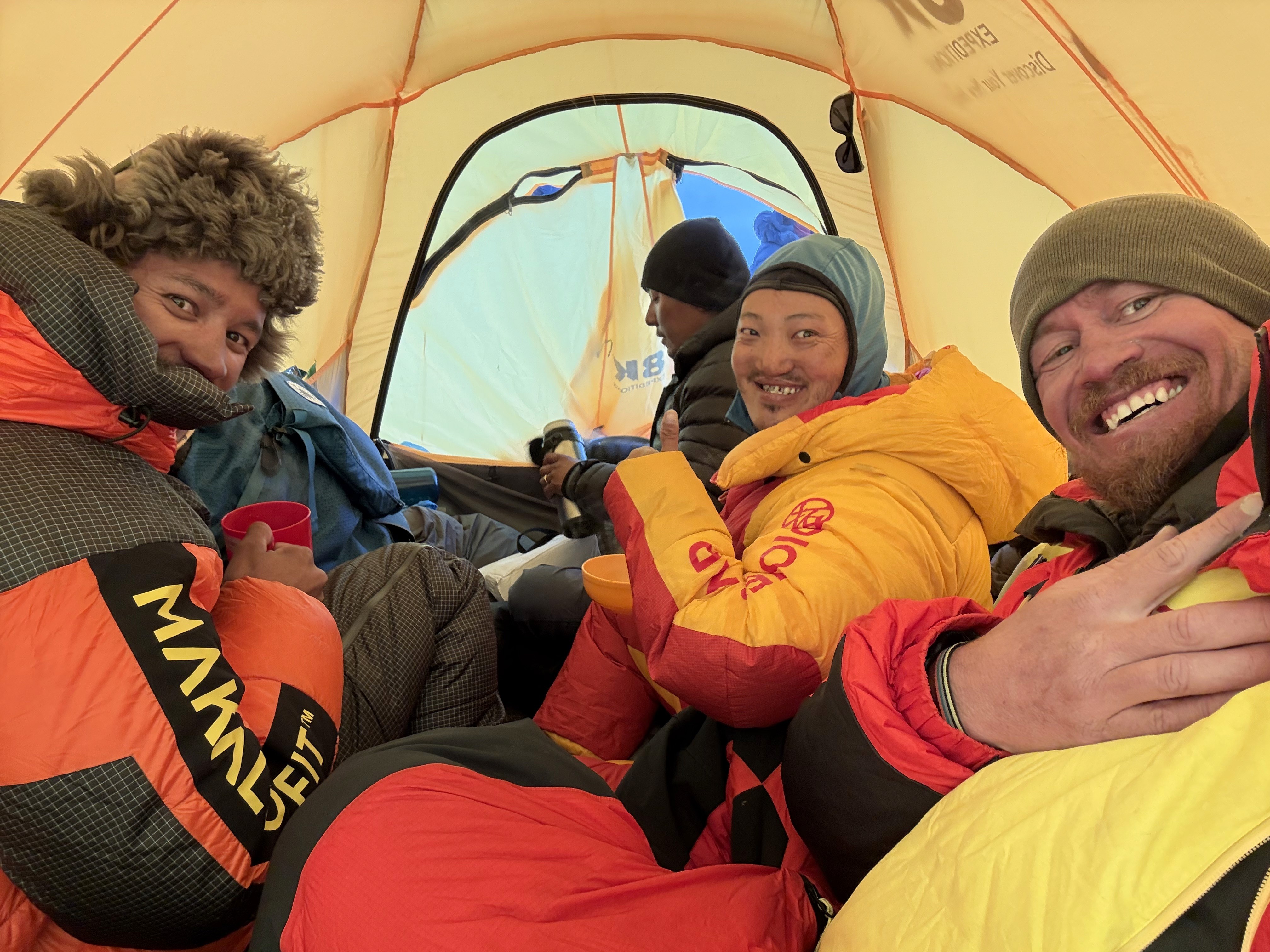
Makalu Camp 2
The Boys
I often spend alot of time hanging out with the Sherpas. This was a fantastic afternoon spent in the tent cooking, boiling and having laughs
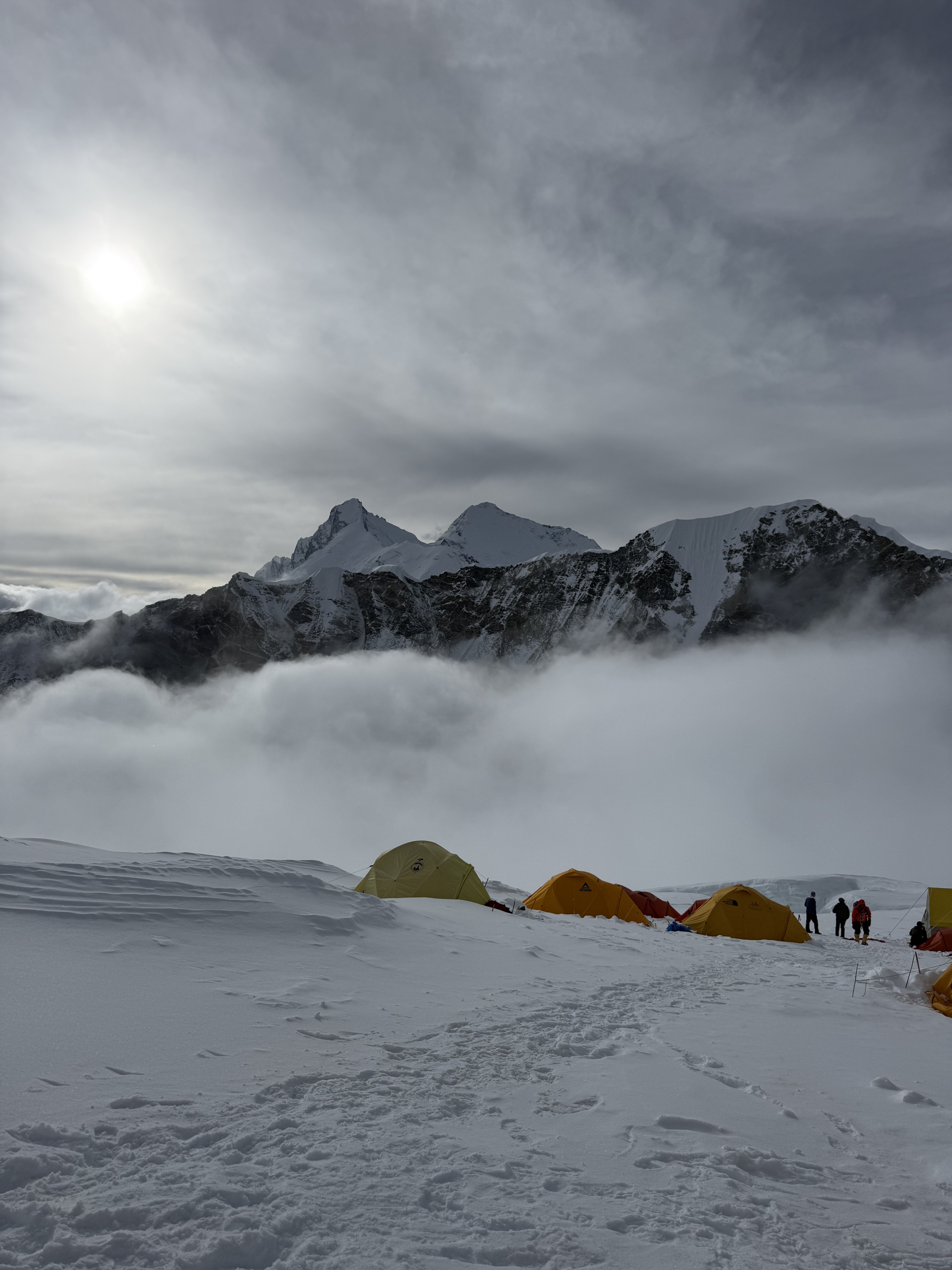
Makalu Camp 2
Camp 2 views
The view from Camp 2. Across the valley lies 2 giants Everest and Lhoste. At the time of taking this picture i was yet to climb them and was in awe of their sizes.

Makalu Summit Ridge
The Final Few Meters
Ashok took this picture from the summit as I catch up to him. It looks calm but i promise the wind was gnarly and i was doing eveything i possible to keep moving.
MOUNTAIN DETAILS
ALTITUDE
8,485
M
COUNTRY / REGION
Nepal / China
ROUTE
Normal Route
OPERATOR / GUIDE
8K Expeditions
CONTINENT
Asia
MOUNTAIN RANGE
Himalaya
https://youtu.be/YpmlRBd8vhQ
