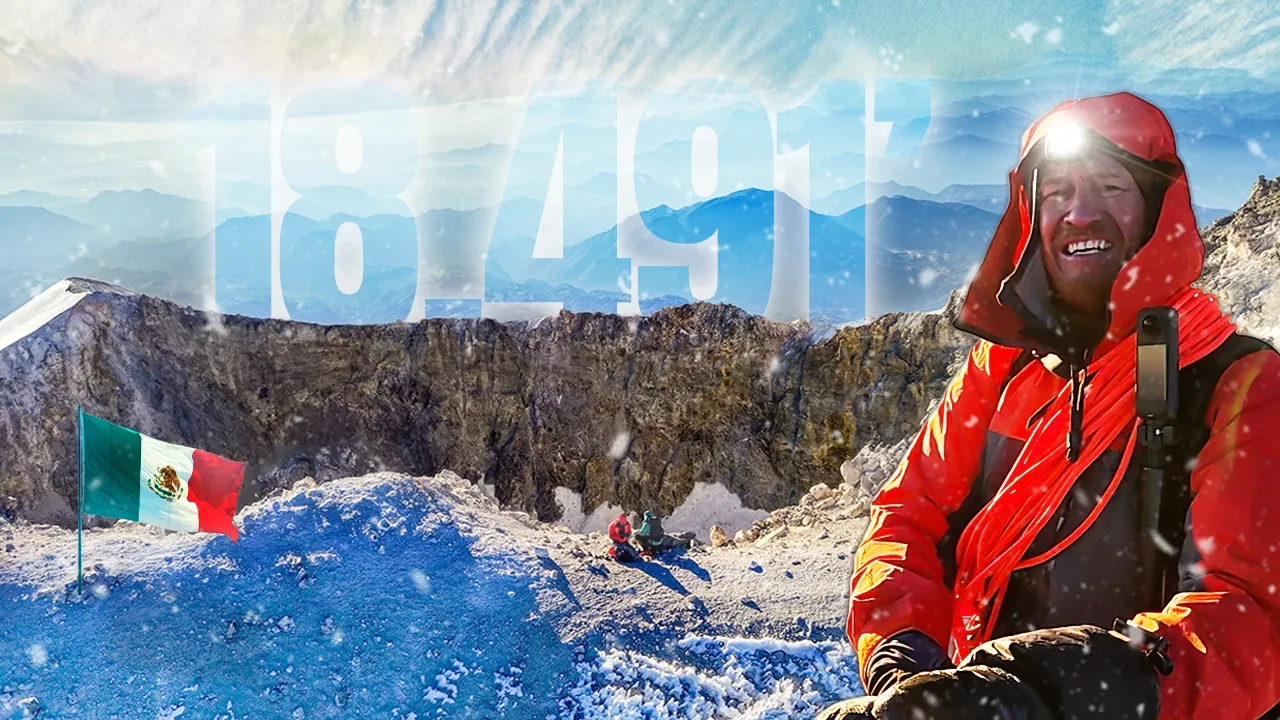

EXPEDITION OVERVIEW
STATUS
SUMMITED
EXPEDITION YEAR
2026
EVEREST TRAINING CONTINUES IN MEXICO
After several weeks climbing through South America, the journey continued north to Mexico. The Nepal season was getting closer, and I wanted to keep climbing and building acclimatization ahead of Everest.
Victor had headed home after Huayna Potosí, so when I started looking for someone to join me in Mexico, Xenia put her hand up.
On February 26, 2026, the two of us travelled to Tlachichuca, where we arranged a local vehicle to take us up the mountain to Piedra Grande Hut at 4,260 meters. There was no guide or expedition operator, we would climb independently.
After a short and fairly uncomfortable night at the hut, we started climbing by headlamp at around 1 a.m. The route took us through loose rocky terrain before reaching the glacier, where we put on crampons and continued upward in unexpectedly bitter cold.
At around 8 a.m. on February 27, Xenia and I reached the summit of Pico de Orizaba.
Strong winds meant we spent barely a minute on top, but we were rewarded with an incredible view of Orizaba’s enormous triangular shadow stretching across the landscape below.
Another summit was complete, and the Mexico chapter of my Everest preparation was underway.
NORTH TO MEXICO
South America had been a long stretch of mountains, altitude and almost constant movement.
After Huayna Potosí, Victor headed home. But I wasn't done yet. The Nepal season was getting closer, and I needed to keep training and building acclimatization for Everest.
Mexico was next, but I needed a climbing partner. When I started looking for someone to join me, Xenia put her hand up and decided to come along for a couple of weeks.
It would be just the two of us.
No guide. No operator. Just another mountain and a plan to climb it independently.
Pico de Orizaba would become the next chapter.
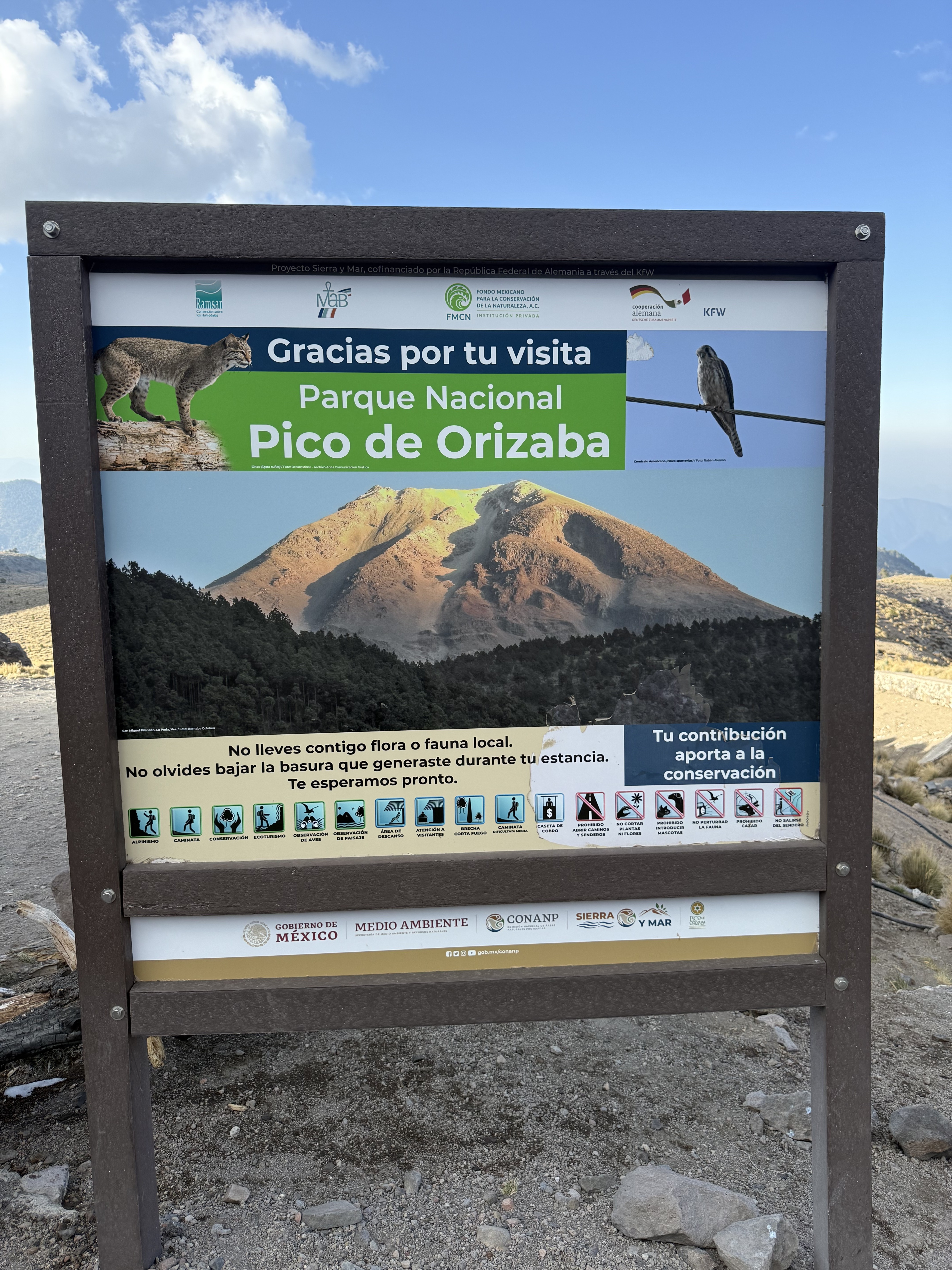
THE REFUGE
On February 26, we hired a local driver to take us up to the refuge on Pico de Orizaba.
We arrived at around 5 p.m., made some dinner and started getting everything ready for the climb.
Then we discovered something neither of us had planned for.
There were no mattresses.
Just hard, bare wooden bunks.
This was my first time staying in a refuge like this and nobody had mentioned that we needed to bring sleeping mats. With a midnight alarm approaching, there wasn’t much we could do about it.
I was carrying my Sea to Summit Alpine sleeping bag, so instead of getting inside it, I laid it across the wooden bunk and slept on top of it to give myself at least a little padding.
It wasn’t exactly luxury accommodation.
A few uncomfortable hours later, the alarms went off.
HEADLAMPS
By around 1 a.m., Xenia and I were outside and moving uphill in the dark.
My Petzl Actik Core headlamp lit the route ahead while the lower mountain took us through loose, scrambly rock toward the glacier.
There were perhaps another ten climbers on the mountain that night. Most had left the refuge before us, so above us we could see a trail of headlamps scattered across the route.
We slowly started catching them.
For a relatively quick mountain, I was travelling light. My Hyperlite Prism 40L was perfect for this kind of small smash-and-grab ascent, enough room for what I needed without carrying a big expedition pack.
Eventually the rock ended and we reached crampon point
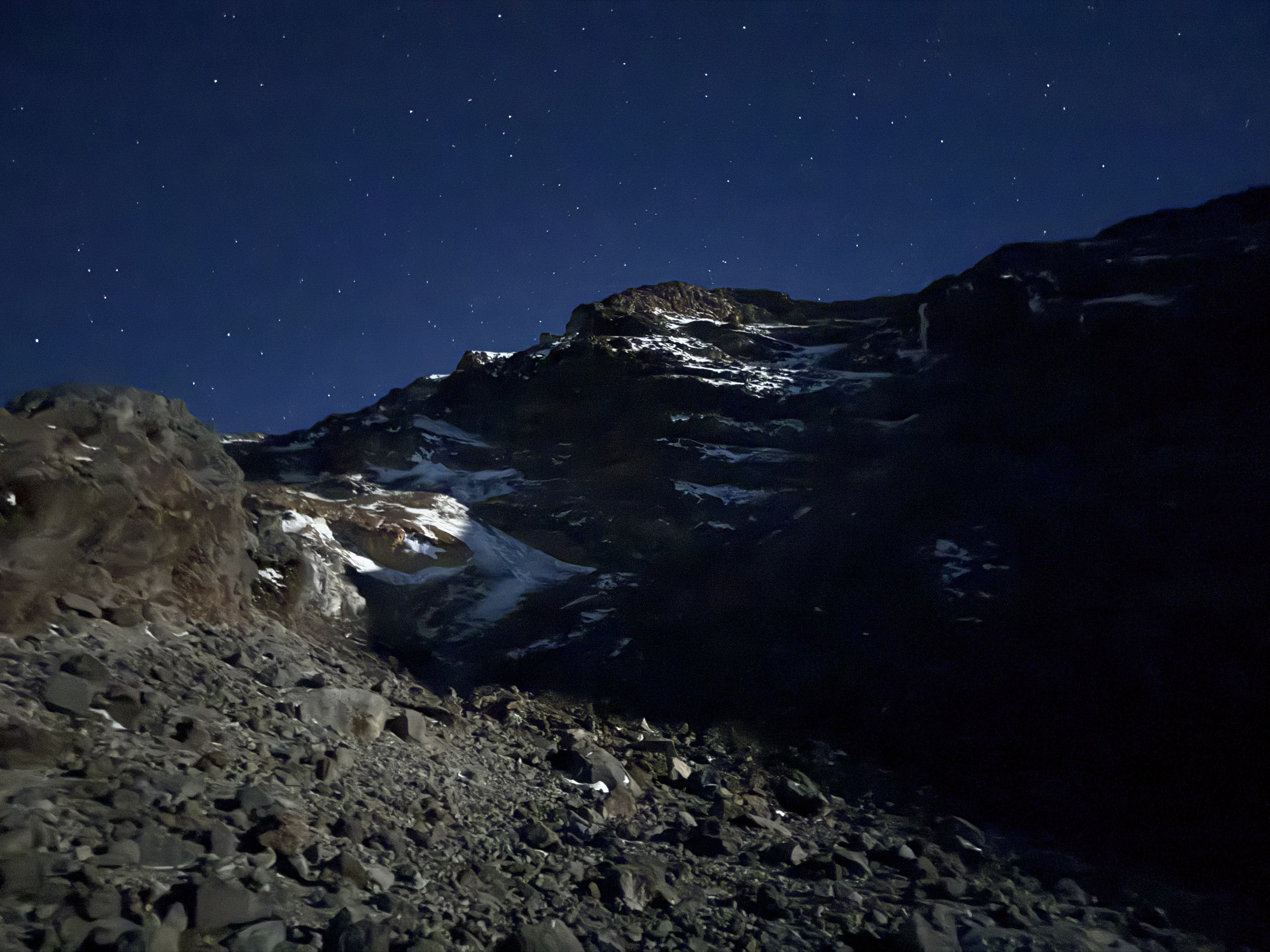

ONTO THE GLACIER
At crampon point I strapped my Petzl Sarkens onto my La Sportiva G-Techs and we stepped onto the glacier.
From there, the climb became a long, steady walk upward through the darkness.
And it was absolutely freezing.
Far colder than either of us had expected.
I had thermals underneath, a light down jacket and my Arc’teryx shell. On my hands were my big Mountain Hardwear Absolute Zero mitts.
And I was still cold.
For a mountain of this altitude, the conditions surprised both of us.
We kept moving, gradually gaining height across the glacier as darkness started giving way to morning.
The higher we climbed, the stronger the wind became.
But the summit was getting closer.
8 A.M. 5,636m
At around 8 a.m. on February 27, 2026, Xenia and I reached the summit of Pico de Orizaba.
There was no long summit celebration.
The wind was strong and it was bitterly cold. We took a few photographs and probably spent no more than a minute on top before deciding we’d had enough.
But there was one view I’ll remember.
Across the valley in front of us, Orizaba was casting an enormous triangular shadow over the landscape.
It was one of those simple moments that makes getting up in the middle of the night and spending hours freezing on a mountain worthwhile.
Then it was time to get down.

THE SMOKING MOUNTAIN
We descended roughly 100 meters below the summit before finding somewhere protected from the wind.
Finally, we could stop.
I pulled out my Thermos Light filled with hot tea, had an energy bar and sat there for a few minutes warming up.
After hours in the cold, that hot tea was probably one of the best things I’d packed.
Then we continued down the glacier, took off our crampons and worked our way back through the rocky lower mountain toward Piedra Grande Hut.
Our vehicle was waiting when we arrived.
Orizaba was done, our second mountain in Mexico after climbing Malinche a few days earlier.
But throughout the climb, there had been another mountain sitting in the distance.
Smoking.
Almost teasing us.
Popocatépetl.
And we were already wondering if there was a way to climb it…
WATCH THE STORY
EXPEDITION FILMS
We Climbed Pico De Orizaba Unguided
FIELD NOTES / PHOTOGRAPHS
FROM THE EXPEDITION

Orizaba
Orizaba Summit

Orizaba
Xenia

Orizaba
Pz Orizaba

Orizaba
P&Z
MOUNTAIN DETAILS
ALTITUDE
5,636
M
COUNTRY / REGION
Mexico
ROUTE
Normal Route
OPERATOR / GUIDE
Self Organized
CONTINENT
North America
MOUNTAIN RANGE
Trans-Mexican Volcanic Belt
https://youtu.be/YpmlRBd8vhQ
