
EXPEDITION OVERVIEW
STATUS
SUMMITED
EXPEDITION YEAR
2025
GOING HIGHER
I’d spent the summer climbing in the Alps.
Mont Blanc. The Dom. Gran Paradiso. And a collection of other peaks around Chamonix.
But I wanted to go higher.
Manaslu was beginning to enter the conversation, although nothing was really decided yet. Before jumping onto an 8,000-meter mountain, I wanted another step in between.
A proper progression.
At that time of year, Lenin Peak made sense.
At 7,134 meters, it would be my first 7,000-meter mountain and by far the highest I’d ever climbed.
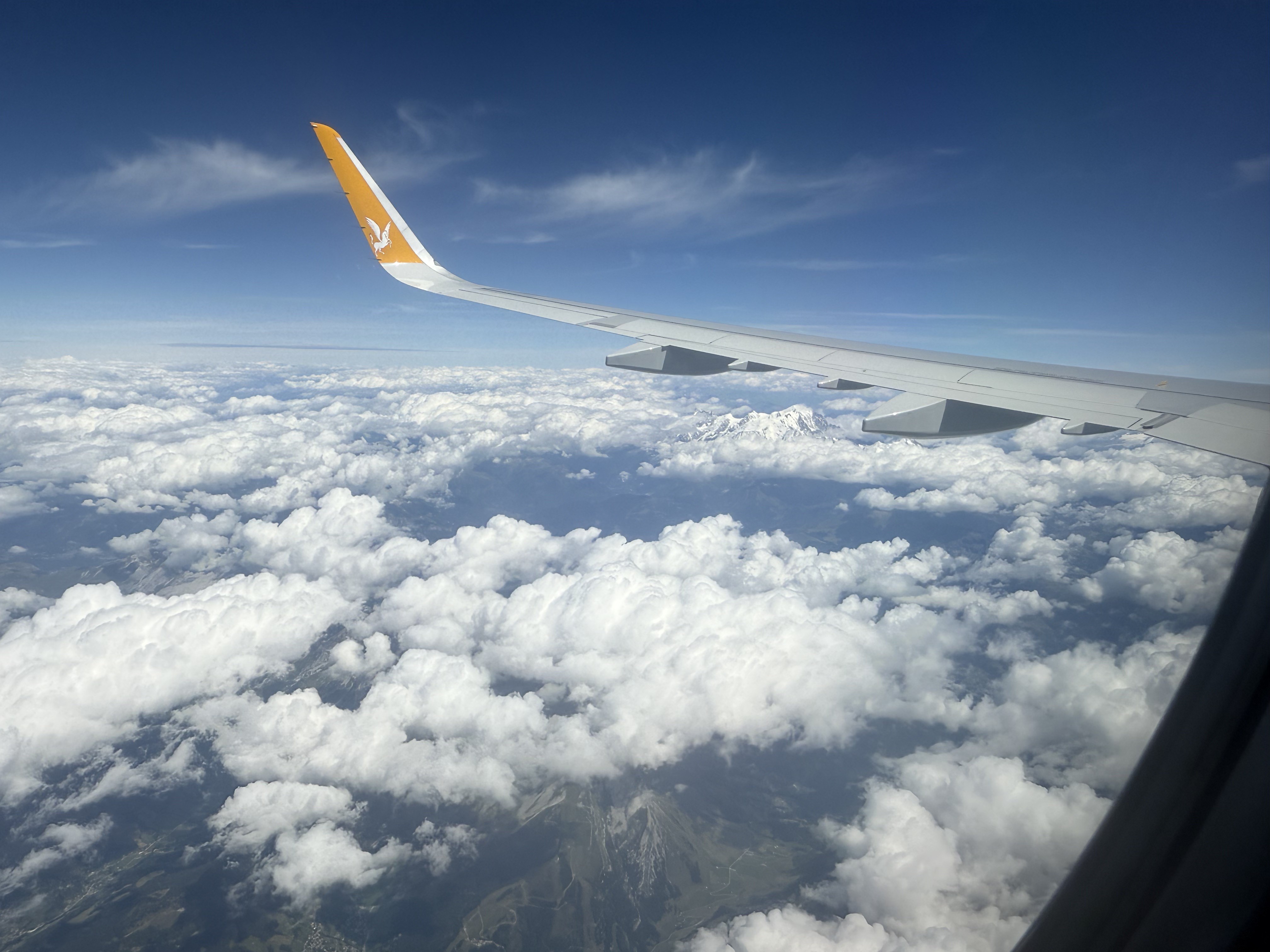
I packed my bags in Chamonix, caught the train to Geneva and flew via Turkey to Osh in Kyrgyzstan.
From there, it was around nine hours by road to Base Camp with Ak-Sai.
When Lenin finally appeared, my first thought was simple:
That’s a big mountain.
Coming from the Alps, the scale was completely different.
Mont Blanc rises roughly 3,000 vertical meters above Chamonix.
Here, I was surrounded by enormous mountains stretching far beyond anything I’d climbed before.
I hadn’t come to Lenin because of the Snow Leopard challenge.
At that point, I don’t think I’d even heard of it.
I was there for one reason.
To find out what happened when I went above 7,000 meters.


EXPEDITION CLIMBING
I was travelling alone, but for Lenin I joined an Ak-Sai guided team.
That's where I met another Australian climber, Abhishek (Abi), who would become a good friend.
We spent around three nights at Base Camp before moving higher.
From there we climbed to Camp 1, also used as Advanced Base Camp, where we spent another two nights.
Then things started becoming more serious.
We left Advanced Base Camp around midnight for Camp 2.
The route crossed the glacier in darkness before climbing higher onto the mountain.
We spent the day and another night at Camp 2 before continuing to Camp 3.
By the time we arrived there, sometime around 10 or 11 in the morning, we'd worked our way progressively through the mountain.
The normal plan was to acclimatize, descend and recover.
Then come back for a summit push.
But I was watching the weather.
And I didn't like what I saw.


THE WINDOW
From Camp 3, we took a short acclimatization walk higher on the mountain.
But my attention was increasingly on the forecast.
The following day looked good.
After that, the weather looked terrible.
Not for a day or two.
Potentially for weeks.
And we were already approaching the end of the season.
The rest of the team was planning to descend and recover before making their summit attempt.
I didn't want to.
I'd come directly from a summer of climbing in the Alps. I felt strong, I felt good at altitude, and there was a weather window sitting directly in front of us.
Going all the way back down the mountain simply because that was the original schedule didn't make sense to me.
So I spoke with the lead guide, Roman, and assistant guide Anna.
I told them I wanted to go now.
They agreed.
The rest of the team would descend.
Anna and I would separate from them at Camp 3 and make our own summit attempt.
There were only two of us.
That night, instead of heading down the mountain to recover, I tried to sleep.
At around 1am, Anna and I stepped out of Camp 3.
We were going for the summit.


7,134 METERS
Lenin doesn’t give you a particularly encouraging start from Camp 3.
Almost immediately, you descend roughly 300 meters.
After spending days working your way higher on a 7,000-meter mountain, deliberately giving altitude back isn’t exactly what you want to be doing.
Then you have to climb all of it again.
Eventually we gained the ridge and began the long push toward the summit.
The climbing itself wasn’t particularly technical.
It was simply long.
And increasingly slow.
We were climbing without supplemental oxygen, and neither of us had completed the full acclimatization schedule we’d originally planned.
Higher on the mountain, every meter began taking more effort.
The wind picked up.
We kept moving.
Finally, at 11:35am on August 12, 2025, Anna and I reached the summit.
7,134 meters.
My first 7,000-meter mountain.
The conditions weren’t particularly spectacular.
We were surrounded by cloud, visibility was limited and the wind was blowing around us.
We spent maybe fifteen or twenty minutes on top.
A few photographs with the Lenin bust on the summit.
And a chance to appreciate what we’d just done.
I was tired.
But I was also pretty chuffed.
I’d come to Central Asia wanting to find out whether I could climb at 7,000 meters.
Now I knew.
THE PRICE
Reaching the summit was only half the climb.
And the descent hurt.
I was exhausted.
We’d pushed for the summit without fully completing the acclimatization cycle, and now I was paying for it.
Then I made another mistake.
I ran out of water.
Dehydrated, tired and still above 6,000 meters, everything slowed down.
What had already been a long day became a grind.
We finally reached Camp 3 around nightfall.
I didn’t have much left.
We slept there before descending to Camp 2 the following day and continuing toward Advanced Base Camp.
By the time I reached ABC, my stomach had joined the list of problems.
I was fatigued, dehydrated and feeling terrible.
Fortunately, there was a doctor at camp.
I was given medication and two IV drips to get some fluid back into me before continuing down.
At Base Camp, I received more IV fluids.
Eventually I started feeling human again.
Lenin had given me my first 7,000-meter summit.
It had also given me a fairly direct lesson about hydration, acclimatization and just how badly altitude can punish small mistakes.


THE NEXT LEVEL
Back at Base Camp, I had time to see the rest of the team before they headed up for their own summit attempt.
The weather I’d been watching arrived.
None of them reached the summit.
For AbI, the consequences were worse.
He fell into a crevasse and badly injured his knee, tearing his ACL and MCL.
It ended his expedition and also meant he wouldn’t be joining the Manaslu climb we’d been discussing.
Lenin was also where I met Lakpa Sen, who would later become a close friend in Nepal and another important part of my climbing journey.
Within a couple of days, I was on the road back to Osh.
Then Bishkek.
Then Kathmandu.
The next step was no longer hypothetical.
8,000 meters.
Looking back, that’s what Lenin represents to me.
I didn’t want to jump straight from smaller trekking peaks onto one of the highest mountains in the world.
I wanted progression.
The Alps had taken me into the 4,000s.
Lenin took me beyond 7,000.
And it showed me that I was ready to find out what came next.
Interestingly, even now, Lenin remains the only 7,000-meter mountain I’ve summited.
And climbing to 7,134 meters without supplemental oxygen was harder in some ways than climbing considerably higher on an 8,000er with high-flow oxygen.
It taught me what altitude actually felt like when there was nothing helping me.
Only later did I learn about the five Snow Leopard peaks.
By then I’d already climbed one of them.
But at the time, Lenin wasn’t about completing another list.
It was about progression.
A few weeks later, I would stand on the summit of my first 8,000-meter mountain.
Lenin was the next level.


FIELD NOTES / PHOTOGRAPHS
FROM THE EXPEDITION

My Box Tent at Base Camp
Base Camp Tents

River crossing on the way to ABC

Yuhin Peak Summit

Glacial walk out of ABC

Climbing Ladders at Night

Climbing Ladders

Some People just cant Handle the Altitude

glacier walking

Walking to C2

Tent feet C3

More Glacier walking

Lenin Summit

Descending from Camp 3

Crossing the Glacier

Descending from Camp 2
MOUNTAIN DETAILS
ALTITUDE
7,134
M
COUNTRY / REGION
Kyrgyzstan / Tajikistan
ROUTE
Normal Route
OPERATOR / GUIDE
Ak-Sai Travel
CONTINENT
Asia
MOUNTAIN RANGE
Pamir
https://youtu.be/YpmlRBd8vhQ
