OUTDOOR PIRATE / MOUNTAIN OBJECTIVE
Chimborazo
6,263
M
Euador
SUMMITED
OBJECTIVE CATEGORIES
EXPEDITION OVERVIEW
STATUS
SUMMITED
EXPEDITION YEAR
2026
SUPPLEMENTAL OXYGEN
NO O2
THE STORY
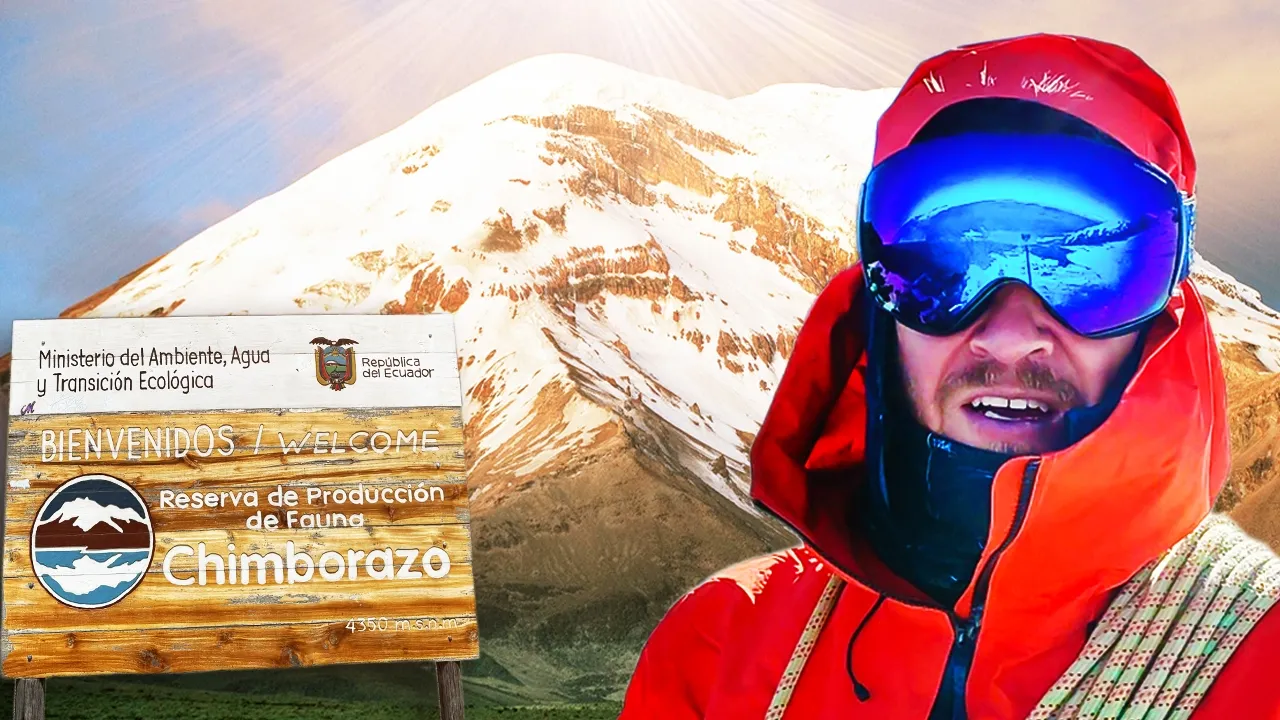
An independent ascent of 6,263m Chimborazo, the point on Earth’s surface farthest from its centre, followed immediately by a race back to Cotopaxi for a second summit attempt on consecutive nights.
FARTHEST FROM THE CENTRE
After our first attempt on Cotopaxi ended in bad weather, the next mountain was already locked in.
Chimborazo.
At 6,263 metres, it isn't the highest mountain in the Andes. It isn't even the highest mountain in Ecuador.
But because of the Earth's equatorial bulge, Chimborazo's summit is the point on the Earth's surface farthest from its centre.
That alone made it a mountain I wanted to climb.
More importantly, it fitted perfectly into what Victor and I were doing in South America.
Get high.
Climb long days.
Recover quickly.
Then do it again.
By now we'd already climbed Illiniza Sur and made our first attempt on Cotopaxi. Chimborazo would take us above 6,000 metres and continue building the acclimatization I wanted before eventually heading to Nepal.
This time, there would be no guide.
Our logistics team had secured the authorization we needed, and Victor and I would climb independently.
We drove out from Quito toward Chimborazo.
Another mountain.
Another big day.
SLEEP LOW
We deliberately chose to stay lower on the mountain.
There was the option of moving higher before the climb, but that would only save us a couple of hours on summit day.
For me, sleeping lower made more sense.
Rest properly.
Then make the summit day longer.
That was exactly the kind of training I wanted.
We prepared our gear at the refuge near the trailhead and tried to get some sleep.
The plan was straightforward.
Leave around midnight.
Climb the normal route.
Reach the summit in the morning.
Then come all the way back down.
By around 11 p.m. or midnight, Victor and I were moving.
Ahead of us was more than 6,000 metres.
And hopefully a very long day.
THROUGH THE NIGHT
The lower mountain began with loose rock and scree.
We climbed toward the higher camps before following a traversing path across the mountain, with a substantial drop away beside us.
There was a short climbing section along the way, and eventually the terrain transitioned from rock onto the glacier.
Crampons on.
Then we settled into the rhythm.
Switchback after switchback.
Higher and higher through the darkness.
There was nothing particularly complicated about it.
That was almost the point.
This expedition wasn't about trying to find the most technically difficult mountain possible.
It was about becoming efficient.
Learning how my body responded to repeated altitude.
Learning how to keep moving hour after hour.
And then seeing how quickly I could recover and do it again.
As daylight arrived, we were still climbing.
But we were moving well.
6,262 METERS
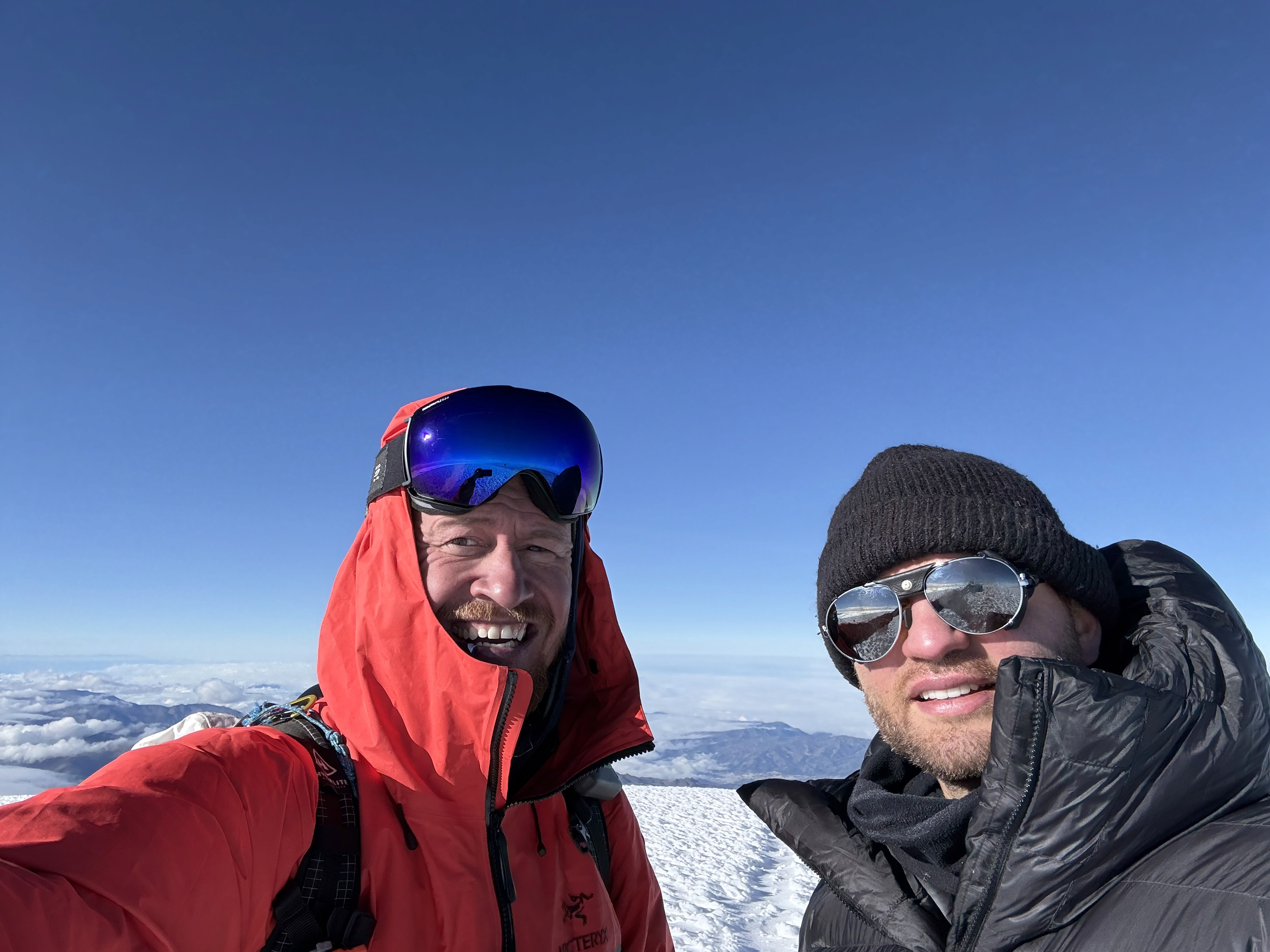
We reached the summit area at around 9 a.m.
Chimborazo has more than one summit point, and after reaching the first we dropped our bags before continuing across to the true high point.
Then there was nowhere higher to go.
6,263 metres.
The conditions were spectacular.
Blue sky.
Huge views across Ecuador.
From the summit we could see Cotopaxi, Illiniza Sur, Cayambe and the surrounding volcanoes rising above the clouds.
I launched the drone and watched the scale of Chimborazo unfold around us.
We spent around twenty minutes on top.
Standing there also came with one of Chimborazo's strange distinctions.
Because the Earth bulges around the equator, we were standing farther from the centre of the Earth than anyone standing on Everest would be.
It was a completely different way of thinking about being on top of the world.
But one mountain in particular kept drawing our attention.
Cotopaxi.
THE NEXT MOUNTAIN
The descent from the glacier was quick.
Once we reached the loose terrain lower down, things slowed again.
Victor had less experience moving quickly through scree, and there was plenty of slipping and sliding as we worked our way back toward the trailhead.
But during the descent, our attention had already shifted.
We weren't finished with Cotopaxi.
The first attempt had ended with us turning around in terrible weather. I'd been frustrated by the decision at the time, and we'd always intended to return.
Now we had a problem.
Our travel schedule was tight.
If we wanted another shot at Cotopaxi, it had to be that night.
So while we were still on Chimborazo, we radioed our logistics team.
Get the permits ready.
We're coming back.
At around 3 p.m., after roughly fifteen or sixteen hours on the mountain, we finally reached the trailhead.
Normally, that would have been the end of the day.
Instead, we got into the vehicle.
And drove directly toward Cotopaxi.
NO RECOVERY
There was no hotel.
No shower.
No proper recovery day.
We had just spent roughly sixteen hours climbing Chimborazo, and now we were racing toward Cotopaxi before the national park closed.
The drive took around a couple of hours.
We arrived late, with our logistics team having to help convince the park staff to let us through.
By around 5 or 6 p.m., we reached the lower refuge.
Eat.
Rehydrate.
Get into bed.
Try to sleep.
In only a few hours, the alarm would go off again.
We'd climbed above 6,000 metres that morning.
Now we were about to try another major Ecuadorian volcano on consecutive nights.
This was exactly why I'd come to South America.
Not simply to collect summits.
But to find out how efficiently I could climb, descend, recover and go again.
Nepal was getting closer.
But first, we had unfinished business with Cotopaxi.
MOUNTAIN DETAILS
ALTITUDE
6,263
M
COUNTRY / REGION
Euador
ROUTE
Normal ROute
OPERATOR / GUIDE
Self Guided
CONTINENT
South America
MOUNTAIN RANGE
Andes
https://youtu.be/YpmlRBd8vhQ
